How to choose a GRC platform in 2026: a buyer's guide for European organisations
Which GRC platform should you look at? Start with what's driving the purchase, match it to the right type of platform, and test every vendor with the same ten demo scenarios. Here's how to build a shortlist in one week.

You've decided you need a GRC platform. Maybe the spreadsheets can't keep up any more, maybe NIS2 has landed on top of GDPR, or maybe a customer has asked for ISO 27001. Now comes the question every buyer asks: which platform should we actually look at?
This guide answers it without a vendor league table. We're a vendor ourselves, so we don't rank or review our competitors. Instead you get what a ranking can't give you: how to work out which type of platform fits your situation, ten demo scenarios that show the difference between platforms in practice, the red flags to watch for, and a plan for getting from long list to shortlist in a week.
About this guide: Written by Johannes Aagaard, Chief Product Officer at .legal, a Danish GRC platform. Because we sell a GRC platform, this guide names no other vendors and makes no claims about them. It describes types of platforms and gives you the tools to judge any vendor yourself, including us. Last updated October 2026.
The short answer: which GRC platform should you choose?
Which GRC platform you should choose depends on what's driving the purchase. If you need SOC 2 or ISO 27001 quickly to sell to international customers, look at automation platforms built around cloud and code integrations. If you need to cover GDPR, NIS2 and ISO 27001 at the same time as a European organisation, look at European GRC platforms with EU templates and EU hosting. Large regulated groups with enterprise risk and internal audit needs should look at enterprise suites.
The rest of this guide helps you place yourself in one of those groups, then test the vendors inside it properly.
Start with your need, not with the vendors
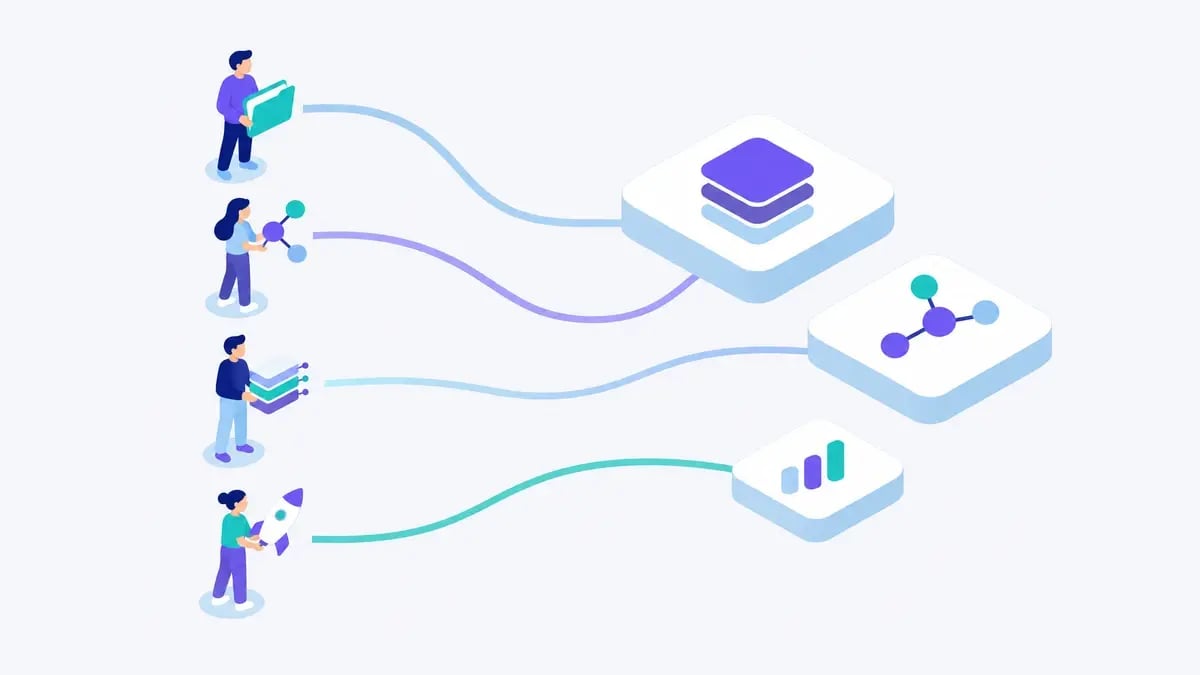
Most buyers start by booking demos. That's backwards. Every demo looks good when the vendor picks the story. Decide first what problem you're solving, because that decides which type of platform deserves your time. In our experience, buyers fall into four groups.
1. GDPR first
You're a DPO, a lawyer or an administrator, and the job is the record of processing activities under GDPR Article 30, data processing agreements and processor audits under Article 28, risk assessments and DPIAs under Article 35, and breach handling within 72 hours under Article 33. Look for a platform with deep GDPR functionality out of the box, not a security tool with a GDPR checklist bolted on. If NIS2 or ISO 27001 is likely within two years, make sure the same platform can grow into them so you don't end up running two systems. Our article on GDPR in Excel or software covers the point where spreadsheets stop working.
2. NIS2 or ISO 27001
You're responsible for information security and need an ISMS: risk assessment, a Statement of Applicability, controls, incidents and suppliers. Look for a platform where risks, controls and evidence are linked, so a risk under ISO 27001 clause 6.1.2 leads to a treatment plan and controls you can follow up on. Under NIS2 you also need a workflow for incident reporting under Article 23 and documented supply chain security under Article 21(2)(d). Our NIS2 implementation guide lists what has to be in place.
3. Several frameworks and group companies
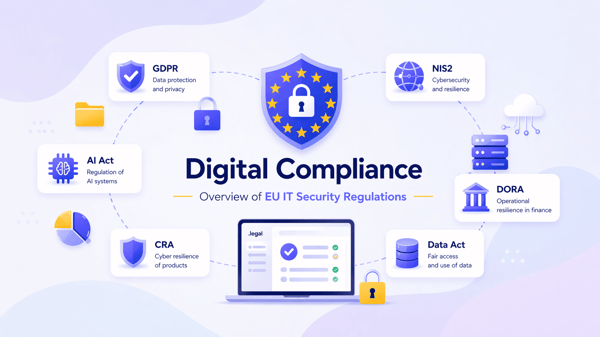
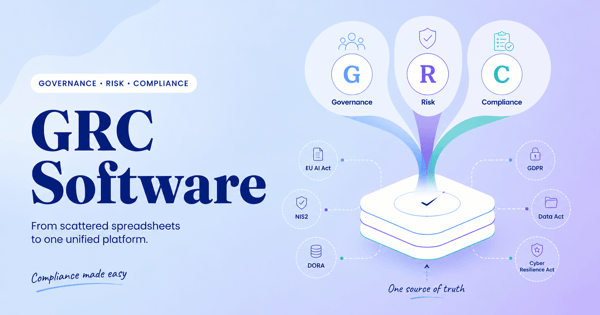
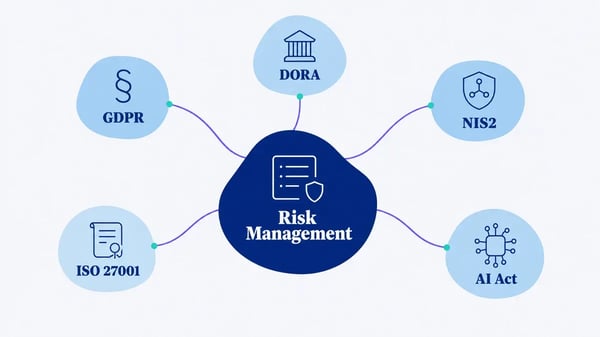
You cover GDPR, NIS2 and ISO 27001, perhaps DORA or the AI Act too, across several legal entities. The danger here is triple work: the same access control documented three times for three frameworks. Look for a platform where one task or one piece of evidence counts towards several frameworks at once, and where subsidiaries can share templates but keep their own data and owners.
4. Tech or SaaS that needs certification fast
You sell software, often to customers outside Europe, and a deal depends on SOC 2 or ISO 27001. Speed and automatic evidence collection matter most. Look for a platform with integrations to your cloud environment, code repositories and HR system, plus a network of auditors. If you also process large volumes of personal data in Europe, check that GDPR is covered in depth and not only as a set of controls.
Three types of GRC platform, and where each falls short
Once you know your group, you can sort vendors into types. The table describes the typical pattern for each type. Individual vendors will differ, which is exactly why the demo scenarios further down matter.
| Type | Built for | Typical strength | Typical weak spot | Always ask |
|---|---|---|---|---|
| International automation platforms | Tech and SaaS companies that need SOC 2 or ISO 27001 to sell | Integrations to cloud, code and HR systems, automatic evidence collection | GDPR documentation and national NIS2 rules are often lighter. Contracting party may sit outside the EU | Where is our data hosted, including sub-processors? Show us the record of processing activities |
| European GRC platforms | European organisations covering GDPR, NIS2 and ISO 27001 together | EU templates, local language, EU hosting, depth in GDPR and national rules | Fewer automatic technical integrations. Breadth varies a lot between vendors | Who maintains the frameworks when the rules change? How do group companies work? |
| Enterprise suites | Large regulated groups with ERM, internal audit and financial regulation | Configurability, complex workflows, scale | Long implementation, consultancy costs and the need for an internal administrator | How long until our first framework is live, and who does the configuration? |
| Single-framework tools | Organisations with one requirement, typically GDPR | Simple, cheap, quick to start | A second framework usually means a second system | What happens when NIS2 or ISO 27001 comes into scope? |
Two things are worth knowing before you use the table. First, the line between the types is blurring, as automation platforms add European frameworks and European platforms add integrations. Second, "supports NIS2" can mean anything from a downloadable checklist to a maintained framework with controls, tasks and reporting. The only way to tell the difference is to see it working, which brings us to the demo.
Ten demo scenarios to ask every vendor for
A standard demo shows you the vendor's best side. A scenario demo shows you how the platform handles your work. Send the same scenarios to every vendor at least three working days before the demo, ask them to use your examples, and have the same two or three people score every demo against your weighted scorecard. Pick the scenarios that fit your group from the previous section.
GDPR
- A new HR system. "Register our new HR system as a processing activity, link the processor and show where it appears in the record of processing activities."
- Processor audit. "Send an audit to a processor, receive an answer with a deviation and show how we follow it up."
- A personal data breach. "Log a breach, document the assessment and show how we decide within 72 hours whether to notify the supervisory authority."
NIS2 and ISO 27001
- From risk to control. "Assess the risk on one of our critical systems using our method, and show how the risk links to a treatment plan and to controls."
- Statement of Applicability. "Show our Statement of Applicability, change the status of a control and attach evidence."
- NIS2 incident. "Take a significant incident from the 24-hour early warning through the 72-hour notification to the final report within one month. Who gets which task?"
Across frameworks and the organisation
- One task, several frameworks. "Show how one piece of evidence, for example our access review, counts towards ISO 27001, NIS2 and GDPR without being uploaded three times."
- A new subsidiary or a new requirement. "We acquire a company mid-year that falls under NIS2. Show what we have to set up, and tell us what it does to the price."
- Management reporting. "Produce the report we would give the board next quarter." Under NIS2 Article 20, management bodies must approve and oversee cybersecurity risk management measures, so this report matters.
- Exit. "Export all our data now, and show us the format." A vendor who can't do this in the demo probably can't do it when you need it.
Tip: Let a control owner who has never seen the platform carry out scenario 7 without help. Compliance teams can learn any system. The real test is whether the IT manager or HR lead who has to complete the tasks can do it unaided.
Six red flags during the buying process
None of these rules a vendor out on its own. But if you see two or three of them with the same vendor, slow down.
- The demo only runs on the vendor's own sample data. If they won't use your scenarios, you don't know how the platform handles your work.
- The year-three price isn't in writing. Indexation, price increases at renewal and the cost of new modules belong in the contract, not in a sales conversation. Our article on what GRC software costs has seven questions that pin this down.
- Data export only as PDF or for a fee. You need your data in a format you can reuse, without paying for it.
- Vague answers on hosting and sub-processors. Your GRC platform will hold your risk assessments, incidents and vulnerabilities, some of your most sensitive information. The vendor is a processor under GDPR Article 28 and a supplier under NIS2 Article 21(2)(d), so ask for the hosting location, the list of sub-processors and a current assurance report such as ISAE 3402, ISAE 3000 or an ISO 27001 certificate.
- Onboarding without a named person. "Self-service" is fine if you have the capacity. If you don't, ask who will help you, for how many hours, and what an extra hour costs.
- The roadmap answers today's requirement. "Coming next quarter" doesn't help you if the requirement applies now. Ask to see what exists, and get roadmap promises in writing if they matter for your decision.
When your vendor is acquired or merged
The GRC market is consolidating. Private equity funds and larger software groups are buying vendors and merging products, in the Nordics as elsewhere. A merger isn't a problem in itself. It can bring more resources and a stronger product. But it changes the questions you should ask, whether you're a current customer facing renewal or a buyer looking at a recently merged vendor.
- Which product will survive, and when? If two platforms are merging, ask which one you'll be on in two years and what the migration plan is.
- Does our price hold at renewal? Many price changes only take effect at renewal, so check what your contract says about notice and indexation.
- Who is our contracting party and processor? A new legal entity may mean a new data processing agreement and new sub-processors.
- Who pays for migration? Your data, your configuration and your history have to move with you. Get it in writing who does the work and who pays.
- Is our framework on the roadmap? Ask specifically about the frameworks you depend on, not the roadmap in general.
The same questions are fair to ask any vendor, including vendors that aren't owned by a fund. And if you decide to switch, the law is moving in your favour. Under the EU Data Act, providers of data processing services may no longer charge switching fees from 12 January 2027. Our migration guide describes what a move involves in practice.
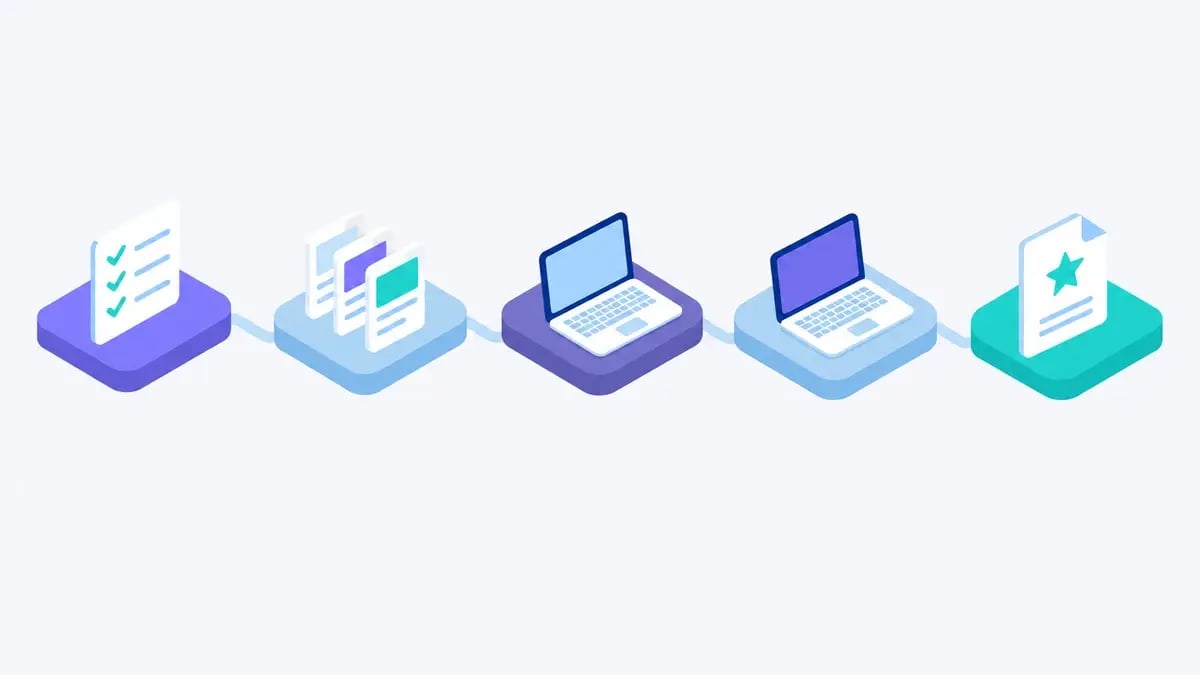
How to build a GRC platform shortlist in one week
Here's a plan that gets you from a long list to a recommendation for management in five working days. Demos depend on the vendors' calendars, so the plan sometimes stretches into the following week, but the order holds. To make it concrete, we follow a fictional buyer through it. Mette Holm and Nordvig Foods Ltd. are invented for this guide.
Mette is the compliance lead at Nordvig Foods, a food producer with 400 employees and two subsidiaries. The company has GDPR in spreadsheets, falls under NIS2 as a food business and has been asked by a large retail customer for ISO 27001. She's in group 3: several frameworks and group companies.
Day 1: Define the need and agree the scorecard
Write down which frameworks, which legal entities and which people will use the platform. Agree a weighted scorecard before the first demo so the most charming vendor doesn't set the criteria. Mette weights cross-framework mapping, group companies and ease of use for control owners highest.
Day 2: Find three or four candidates of the right type
Use your group to pick the platform type, then find candidates through peers in your industry, your auditor, your industry association and software review sites filtered for Europe. Send each of them your demo scenarios. Mette picks European GRC platforms and one enterprise suite as a control.
Days 3 and 4: Run the scenario demos
Ninety minutes per vendor, same scenarios, same people scoring. Score straight after each demo, not at the end of the week. Mette lets Nordvig's IT manager try scenario 7 himself. That alone moves one vendor from first to third place.
Day 5: Price, due diligence and a recommendation
Get prices over three years with the seven price questions, then run the top two through the 16 due diligence checks covering data, security, support and exit. Write a one-page recommendation for management with scores, three-year price and the risks you found. Mette's recommendation isn't the cheapest list price, but it is the cheapest over three years once both subsidiaries are included.
After the decision, the real work starts. Our guide to GRC implementation covers how to get the first framework live in about 90 days.
When .legal fits, and when it doesn't
We said we wouldn't assess competitors, so it's only fair that we assess ourselves by the same standard.
.legal is a European GRC platform that fits if you're a European organisation that needs GDPR, NIS2, ISO 27001, DORA or the AI Act in one platform, where one task counts towards several frameworks at once. Our prices are public, from €200 per module per month, and there's a free plan to start with. We're Danish-owned, with no private equity fund behind us, and our controls are covered by ISAE 3402 and ISAE 3000 type 2 reports audited by BDO.
Consider something else if your most important need is SOC 2 with automatic collection of technical evidence from cloud environments and code repositories. A platform built for exactly that will serve you better. The same applies if you want a heavily customised enterprise suite and have an internal team to administer it.
Still have questions?
Send me your shortlist and I'll go through it with you in 20 minutes, including the vendors that aren't us. Johannes Aagaard, CPO at .legal, runs most of our demos himself.


.legal compliance platform
Put .legal through your demo scenarios
Send us your scenarios before the demo and we'll run them on our platform, with your examples. One task can count towards GDPR, NIS2, ISO 27001, DORA and the AI Act at once.
-
One task mapped to several frameworks at once
-
Group companies with shared templates and their own owners
-
Published prices and a free plan to start with
-
Full data export whenever you want it
-
EU-hosted and covered by ISAE 3402 and ISAE 3000 reports