Privacy by Design and Privacy by Default: GDPR's Requirements for Data Protection
The best time to protect personal data is not after a data breach, but before data is collected at all. Learn what Privacy by Design and Privacy by Default mean in practice – and how to comply with Article 25 of the GDPR.

The best time to protect personal data is not after a data breach, but before personal data is collected at all.
This is good practice, but with Article 25 of the GDPR, it is also a legal requirement. The requirement applies to all processing of personal data – meaning any processes and systems in your organisation where personal data is processed.
Personal data is processed in almost every business process, which means you must comply with the requirements for Privacy by Design and Privacy by Default across all of them, in accordance with Article 25 of the GDPR.
What is Privacy by Design?
Privacy by Design is easy to understand, but can be difficult to implement. It is a concept rather than a checklist of rules to follow – as described by the ICO. Instead, it is about designing data protection into everything you do when processing personal data, whether you are developing a new system, starting a new project, or changing your workflows.
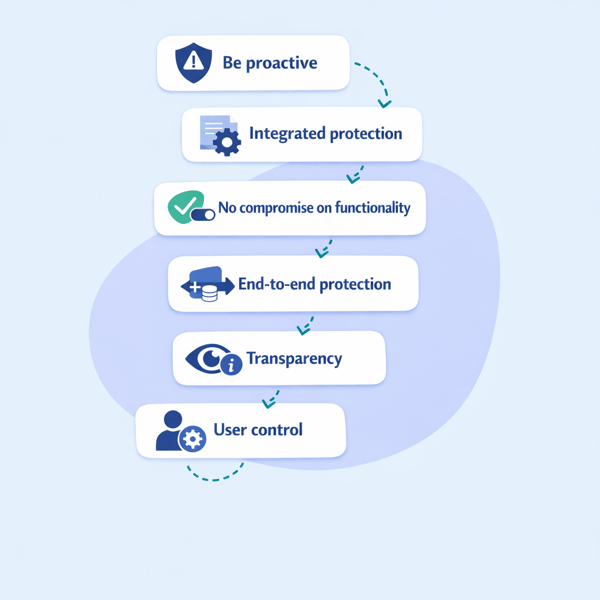
The GDPR requirement for Privacy by Design was likely inspired by Ann Cavoukian's Privacy by Design: The 7 Foundational Principles, where the concept was originally defined. We walk through those principles below.
1. Be proactive
Be proactive in the processing of personal data and take action before problems arise.
This can be done by mapping risks before processing begins, so that security can be built into the entire process or system, helping to prevent data breaches. This may involve higher costs in the short term and requires a clear mandate from leadership, but in the longer term it prevents data breaches and builds greater trust with the organisation's stakeholders.
Principle two covers 'Privacy by Default', which is addressed in a separate section further down the page.
3. Data protection must be integrated
Data protection must be integrated into all systems and processes, which should be built with this in mind from the outset. Data protection should not be something added on afterwards.
4. Do not compromise on functionality
Many assume that Privacy by Design means having to limit the functionality of a system, but good data protection must not render a system unusable. This principle is about ensuring that you do not compromise on functionality when seeking to protect users' privacy.
5. End-to-end data protection
Data must be protected from start to finish.
With Privacy by Design, your organisation must ensure confidentiality, integrity, and availability from cradle to grave – from the point at which personal data is collected through to its disposal. This can be achieved through encryption, access controls, logging, and secure disposal of personal data in line with industry standards.
6. Transparency
Give users information about the processing of their data so they can decide for themselves whether they want to share their data with your organisation. Be clear about which personal data is processed and for what purpose, and provide this information before collection takes place.
7. Give users control
Give users control over the processing of their personal data so they can tighten their own settings, delete data, accounts, and so on. This gives users the ability to act on their personal data protection if they lose trust in your organisation or no longer need to use your solution.
Flexibility
Privacy by Design does not mean you must implement it to the fullest extent in every situation, and you may take costs into account when deciding on a solution. Implementation should instead be based on a risk assessment, and you must then be able to document that you have complied with the principle in your data protection practices.
Privacy by Default
Privacy by Default is part of the Privacy by Design concept, but since it is specifically referenced in Article 25 of the GDPR, we look at it more closely in this section.
What does Privacy by Default mean?
Users must be protected from the moment they start using your systems or services, with default settings configured to protect their privacy. They should not have to enable privacy settings themselves – these should be on by default.
This applies to both IT systems and organisational processes, and it applies every time personal data is processed within the organisation.
In practice, this is unfortunately still not the norm, as many systems and processes are designed so that users must actively enable privacy settings themselves. That is precisely the problem Privacy by Default is intended to address.
Examples of Privacy by Default
Access to personal data
Within a company, employees should only have access to the personal data that is strictly necessary. It is common to see employees with access to more information than they need to carry out their tasks. This should be changed by introducing access restrictions.
As an example, a customer service employee should only have access to the minimum information about the customer needed to resolve the issue. If more information is required, the employee can request additional access to complete the task.
Default settings in IT systems
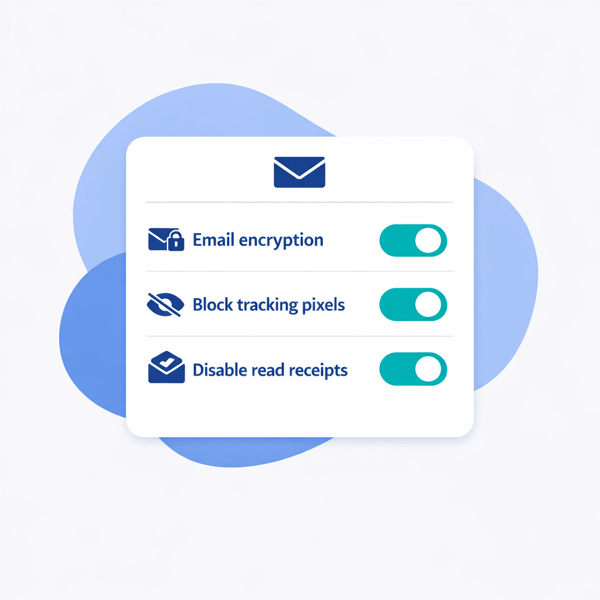
Imagine an email application with the following privacy settings:
- Encryption of emails.
- Blocking of external tracking pixels.
- Disabling of read receipts.
If the application supports these privacy settings, they should be enabled by default. Users can always choose to turn them off, but in practice this rarely happens, since most users want to protect their privacy. This is precisely why systems and processes should be designed to protect users' privacy from the outset – and why this was included in the GDPR.
Summary
When working with personal data and Privacy by Design and Privacy by Default, you can regularly ask yourself the following questions:
- How would I design this processing of personal data if it were my own personal information being processed? If you follow your own answer to that question, you are probably implementing Privacy by Design correctly.
- Are users' settings still protected even if they do not change them? If the answer is yes, you have probably implemented Privacy by Default correctly.
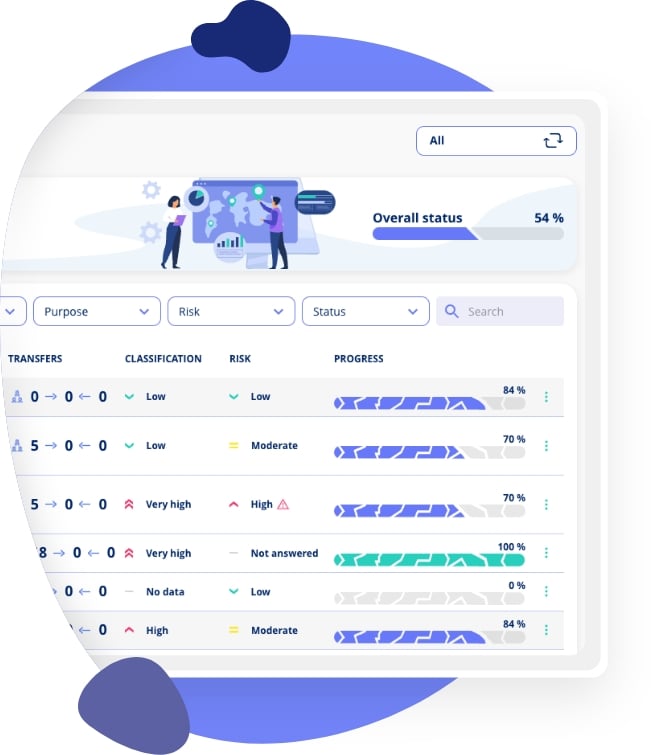
For all your processing activities and information assets, you should ensure that you have implemented Privacy by Design and Privacy by Default, and you can record this in your GDPR documentation using .legal's GDPR compliance software.
Want to see how .legal can help you document and comply with your GDPR obligations? Book a demo and let us show you the platform.












.legal compliance platform
Document Privacy by Design across your organisation
-
Processing activity documentation
-
Privacy by Design tracking
-
Risk assessment integration
-
Complete GDPR compliance overview





.jpeg?width=131&height=26&name=right_people_logo%20(1).jpeg)

.jpg?width=58&height=26&name=Praktiserende%20L%C3%A6gers%20Organisation%20(1).jpg)
.jpg?width=108&height=26&name=finans%20danmark%20(1).jpg)


.jpg?width=89&height=26&name=klasselotteri%20(1).jpg)

-1.png?width=68&height=52&name=bws_shipping_rgb%20-%20Kopi%20(2)-1.png)



.jpeg?width=135&height=26&name=AH%20industries%20(1).jpeg)






.jpg?width=493&height=57&name=KAUFMANN%20(1).jpg)