NIS2 Risk Assessment: Complete Guide to Compliance
Learn the 7-step process for conducting NIS2-compliant risk assessments. Practical examples, templates, and tools to protect your critical services and meet regulatory requirements.

The NIS2 Directive requires organisations in critical and important sectors to conduct thorough risk assessments of their cybersecurity posture. This isn't just a compliance checkbox—it's about systematically understanding where your organisation is vulnerable and taking concrete steps to protect your critical services.
In this guide, we'll walk through the complete process of conducting a NIS2-compliant risk assessment, from identifying your critical services to creating actionable risk mitigation plans. We'll use practical examples throughout to show exactly how this works in practice.
What is a NIS2 Risk Assessment?
A NIS2 risk assessment is a systematic process for identifying, analysing, and evaluating cybersecurity risks to your organisation's critical services and infrastructure. It's one of the core requirements in Article 21 of the NIS2 Directive.
The assessment helps you understand:
- Which services are critical to your operations
- What systems and processes support these services
- What threats could disrupt these systems
- How likely these threats are to occur
- What the impact would be if they did occur
- What controls you need to implement to reduce risk
Unlike a general information security risk assessment, a NIS2 risk assessment specifically focuses on risks that could affect the continuity of your critical services and, by extension, the sectors and society you serve.
Who Must Conduct NIS2 Risk Assessments?
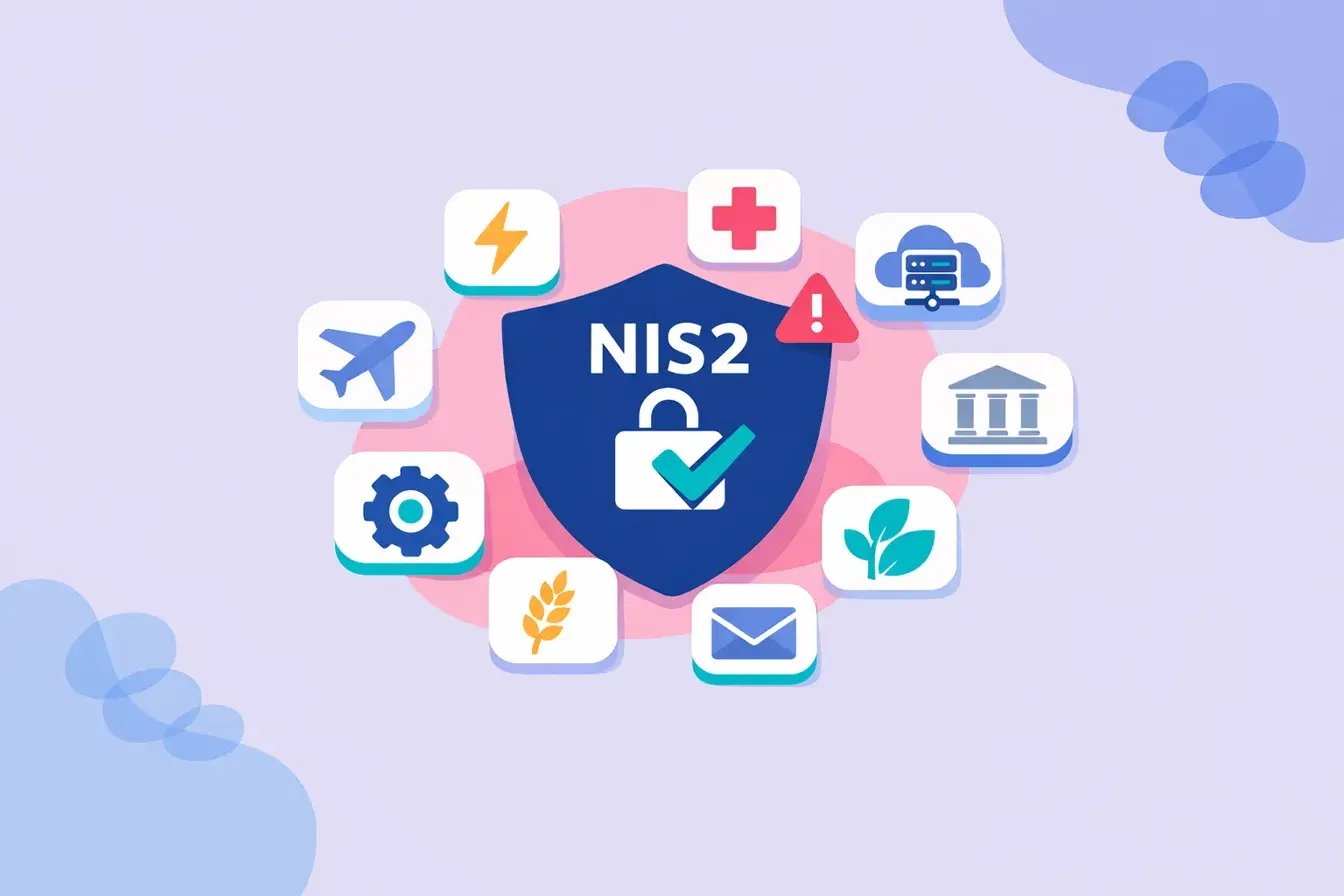
If your organisation is classified as an essential or important entity under NIS2, you must conduct regular risk assessments. This includes organisations in sectors such as:
- Energy (electricity, oil, gas, hydrogen)
- Transport (air, rail, water, road)
- Banking and financial market infrastructure
- Health (healthcare providers, research, pharmaceuticals)
- Digital infrastructure (DNS, cloud computing, data centres)
- Public administration
- Space
- Waste management
- Manufacturing (critical products)
- Food (production and distribution)
- Postal and courier services
The key criterion is whether your organisation provides services that are essential or important for maintaining critical societal or economic activities. If you're unsure whether NIS2 applies to you, consult your national implementation of the directive.
NIS2 Risk Assessment vs Other Risk Assessments
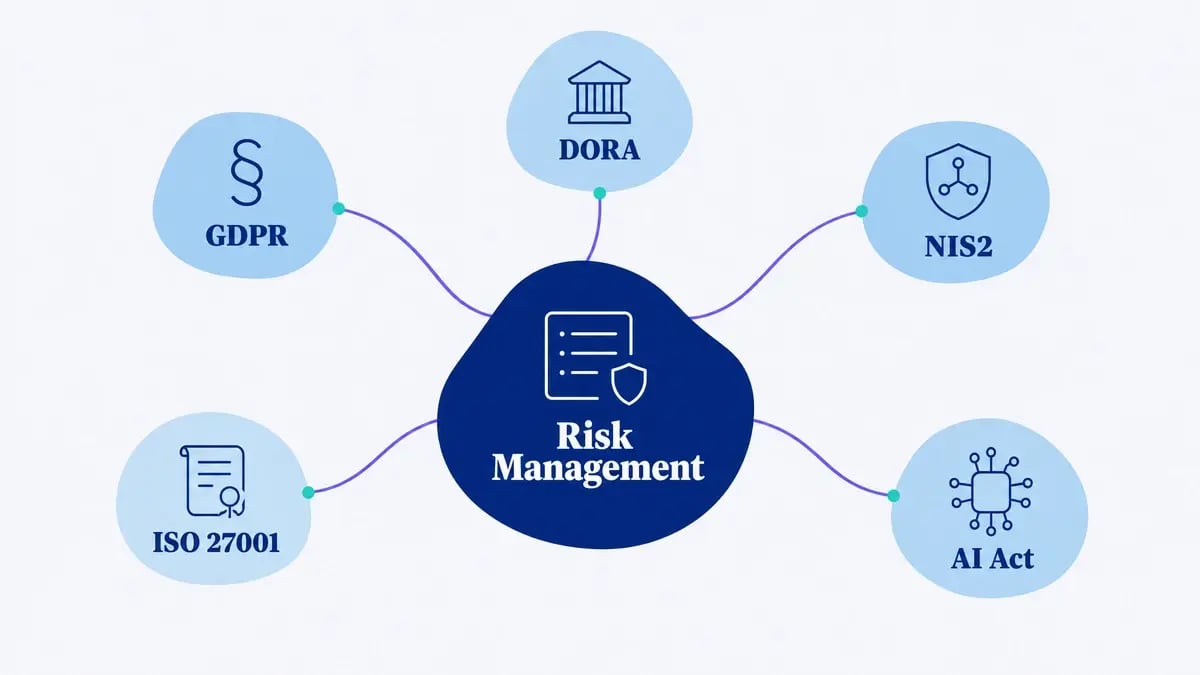
You might already be conducting risk assessments for other frameworks like GDPR, ISO 27001, or general cybersecurity. Here's how NIS2 risk assessments differ:
| Aspect | NIS2 Risk Assessment | GDPR DPIA | ISO 27001 Risk Assessment |
|---|---|---|---|
| Primary Focus | Critical service continuity | Personal data protection | Information security |
| Scope | Critical services and their dependencies | High-risk personal data processing | All information assets |
| Impact Focus | Service disruption, societal impact | Rights and freedoms of individuals | CIA (Confidentiality, Integrity, Availability) |
| Frequency | Annually + when significant changes | When required for high-risk processing | Regularly (at least annually) |
| Mandatory Reporting | To authorities if required | To supervisory authority in some cases | Not mandatory |
The good news is that much of the work overlaps. If you already have ISO 27001 risk assessments, you can reuse significant portions for NIS2, though you'll need to ensure critical services are specifically addressed.
The 7-Step NIS2 Risk Assessment Process
Here's the comprehensive process for conducting a NIS2-compliant risk assessment. We'll use a fictional water utility company, "AquaTech Services," to illustrate each step.
Step 1: Map Your Critical Services
Start by identifying which services your organisation provides that are critical—those whose disruption would have significant negative consequences for society, the economy, or public safety.
Example - AquaTech Services identifies:
- Critical Service 1: Clean water supply to 500,000 residents
- Critical Service 2: Wastewater treatment for the region
- Critical Service 3: Emergency water supply management
For each critical service, document:
- What the service does
- Who depends on it (customers, other sectors)
- What would happen if it was disrupted for 1 hour, 4 hours, 24 hours, 1 week
- Regulatory or contractual obligations related to service levels
Step 2: Identify Supporting Systems and Processes
For each critical service, map out all the IT systems, OT (Operational Technology) systems, processes, and assets that support it.
Example - For AquaTech's water supply service:
| System Type | Specific Systems | Function |
|---|---|---|
| SCADA Systems | WaterControl Pro v8.2 | Monitors and controls water treatment plants |
| Sensors/IoT | Flow meters, pressure sensors, quality monitors | Real-time water quality and distribution data |
| Network Infrastructure | Industrial network, wireless links to remote stations | Connects plants, pumping stations, and control centre |
| Business Systems | Asset management software, maintenance scheduling | Tracks infrastructure health and planned maintenance |
| Communication Systems | Emergency notification system, internal comms | Alerts during incidents and coordinates response |
This creates your "value chain" from critical service down to individual technical components.
Step 3: Map Dependencies
Identify what your critical systems depend on—both within your organisation and from external providers.
Example - AquaTech's SCADA system dependencies:
- Internal dependencies:
- Data centre hosting the SCADA servers
- Network connectivity between sites
- Backup power systems
- IT support team availability
- External dependencies:
- Internet connectivity from ISP "NetConnect"
- Cloud backup service from "SecureCloud Ltd"
- SCADA software support from vendor "IndustrialSoft"
- Electricity supply from energy provider
This step is crucial because NIS2 specifically requires you to address supply chain security. A vulnerability in a critical supplier can be just as damaging as one in your own systems.
Read more about vendor audits and assessments.
Step 4: Identify Threats
For each system and dependency, identify realistic threats that could disrupt it. Consider both cyber and physical threats.
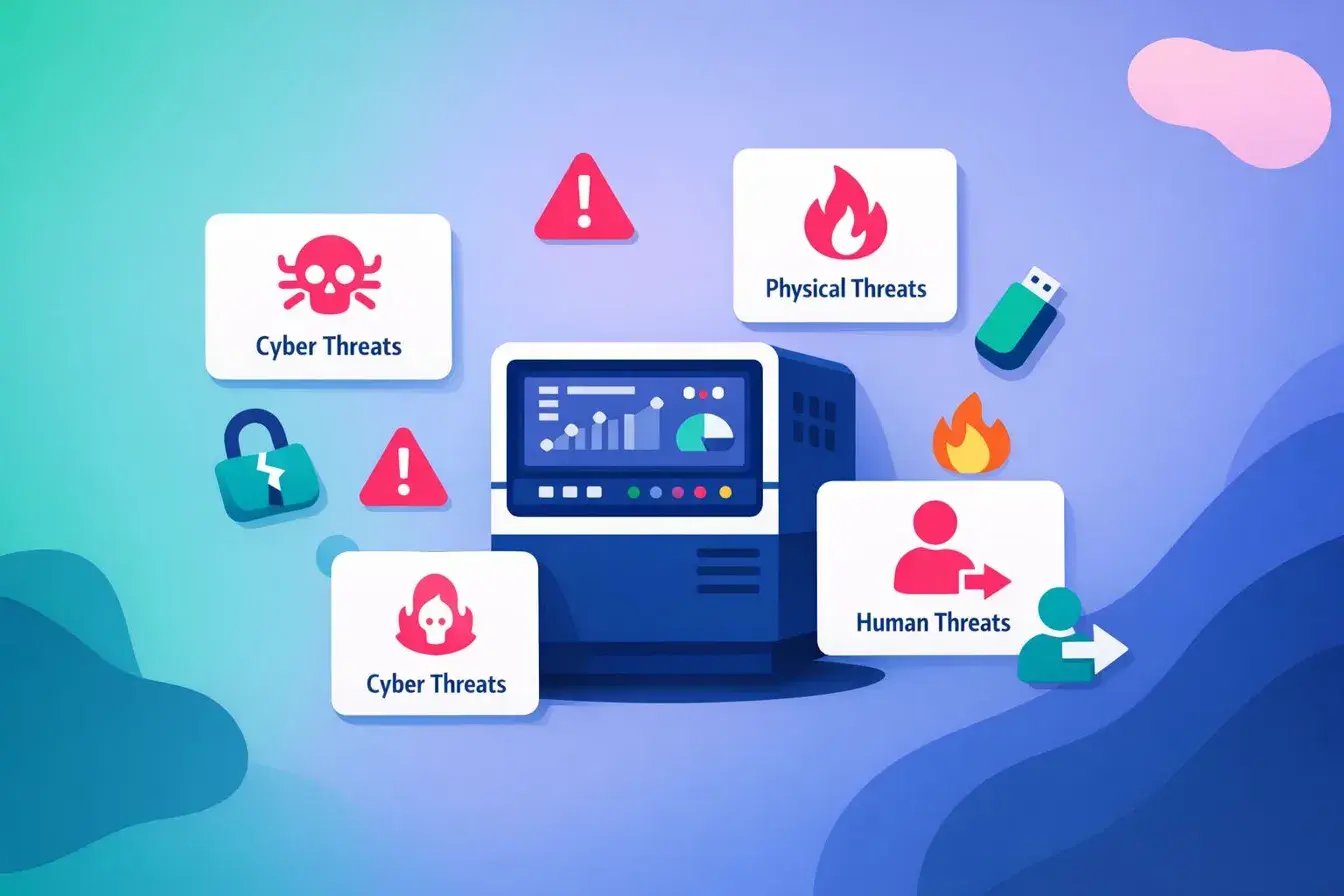
Example threats to AquaTech's SCADA system:
- Cyber threats:
- Ransomware attack encrypting SCADA servers
- Unauthorised access via stolen credentials
- DDoS attack on network infrastructure
- Malware introduced via USB device
- Supply chain attack through software update
- Physical threats:
- Power outage affecting data centre
- Fire or flood at primary facility
- Physical intrusion and sabotage
- Human threats:
- Insider threat (malicious or negligent employee)
- Social engineering attack on operators
- Lack of trained personnel during incident
Don't just think about sophisticated cyberattacks—simple mistakes like misconfigured systems or unpatched software cause many real-world incidents.
Step 5: Assess Probability and Impact
For each identified threat, assess:
- Probability: How likely is this threat to occur?
- Impact: If it did occur, what would the consequences be?
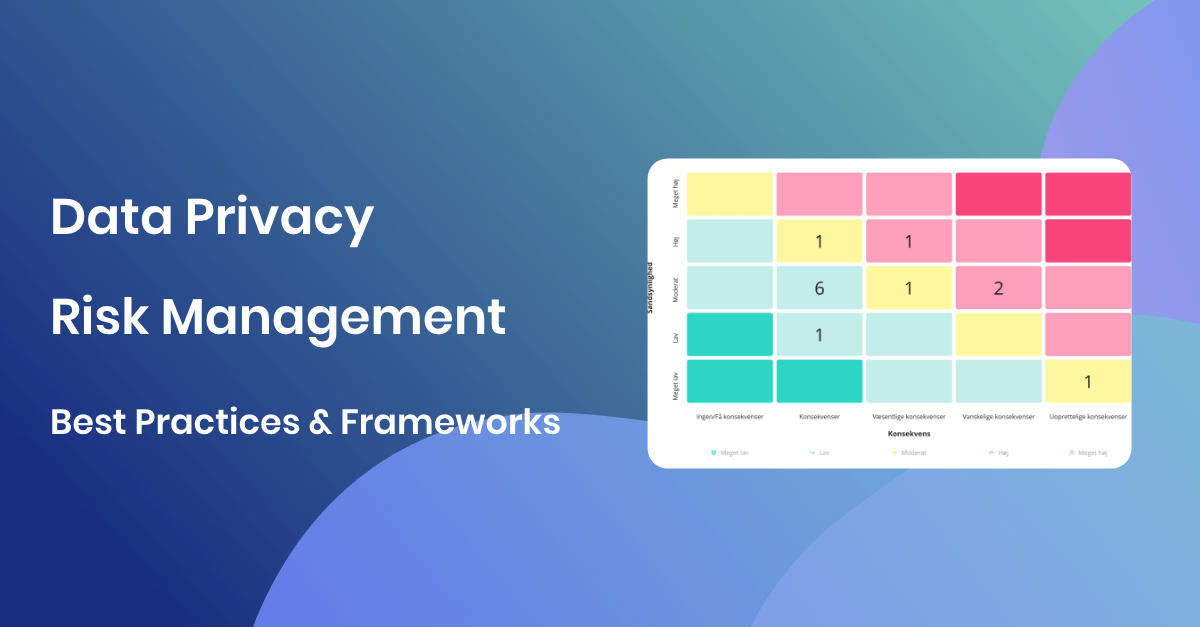
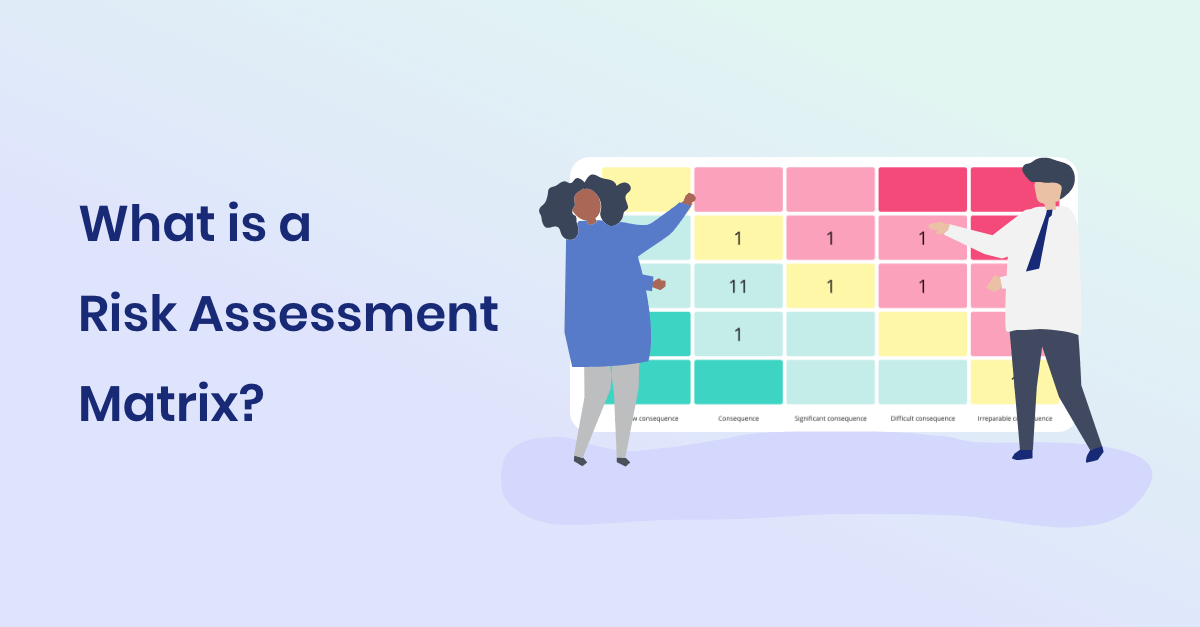
Use a consistent scale, typically 1-5 or Low/Medium/High/Very High.
Example - AquaTech assesses ransomware threat:
Threat: Ransomware attack on SCADA servers
Probability: Medium (3/5)
Reasoning: Water utilities are increasingly targeted. We have some protections but not comprehensive endpoint security on all industrial systems.Impact: Very High (5/5)
Reasoning: Would prevent remote monitoring and control of water treatment. Manual operation possible but significantly degraded. Could affect water quality monitoring. Estimated recovery time: 3-7 days.Risk Level: High (3 × 5 = 15)
Consider impact across multiple dimensions:
- Service continuity: How long would the critical service be disrupted?
- Safety: Could it endanger public health or safety?
- Financial: What are the costs (recovery, fines, lost revenue)?
- Reputational: What's the damage to public trust?
- Legal/Regulatory: Are there compliance violations or penalties?
- Data: Is sensitive or personal data compromised?
Step 6: Determine Risk Treatment
For each risk, decide how to treat it:
- Mitigate: Implement controls to reduce probability or impact
- Transfer: Use insurance or outsource to a provider
- Accept: Consciously accept the risk (with management approval)
- Avoid: Stop the activity that creates the risk
For high-priority risks, create detailed action plans.
Example - AquaTech's ransomware mitigation plan:
Risk: Ransomware attack on SCADA (Risk Level: High)
Treatment: Mitigate
Actions:
- Deploy endpoint detection and response (EDR) on all SCADA servers (Q1 2026)
- Implement application whitelisting on industrial systems (Q1 2026)
- Segregate SCADA network from corporate network with firewall (Q2 2026)
- Establish offline backups of SCADA configuration (Q1 2026)
- Conduct security awareness training for operators (Ongoing)
- Test backup restoration quarterly (Ongoing)
Target Risk Level: Medium (after controls)
Owner: IT Security Manager
Budget: €85,000
This creates a clear roadmap for improving your security posture based on actual risks to critical services.
Step 7: Document and Monitor
NIS2 requires that you document your risk assessment and keep it up to date. This documentation should include:
- List of critical services
- Supporting systems and dependencies
- Identified threats and vulnerabilities
- Risk ratings (probability × impact)
- Risk treatment decisions and action plans
- Residual risk after controls
- Approval from management
The assessment isn't a one-time exercise. You must:
- Review and update it at least annually
- Update it whenever there are significant changes (new systems, new threats, incidents)
- Track implementation of risk mitigation actions
- Monitor whether controls remain effective
- Report to management regularly
Using risk management software can help automate tracking and ensure nothing falls through the cracks.
How Often Should You Update Your NIS2 Risk Assessment?
The NIS2 Directive requires regular risk assessments, but doesn't specify an exact frequency. Best practice is:
- Annual review: Conduct a full review at least once per year
- After significant changes: Update when you:
- Deploy new critical systems
- Change service providers
- Experience a security incident
- Become aware of new major threats
- Undergo organisational restructuring
- Continuous monitoring: Track whether implemented controls remain effective
Some organisations use a rolling review approach, assessing different critical services each quarter so the entire organisation is covered annually without overwhelming resources.
Common Mistakes to Avoid
Based on observing many organisations implementing NIS2, here are pitfalls to avoid:
1. Being Too Generic
Don't just list generic threats like "ransomware" or "DDoS." Be specific to your systems and context. "Ransomware targeting SCADA servers running Windows Server 2019 in the water treatment plant" is much more useful.
2. Ignoring OT/Industrial Systems
Many organisations focus heavily on IT systems and overlook operational technology. If you operate industrial processes, these systems are often the most critical and may have unique vulnerabilities.
3. Forgetting Supply Chain Dependencies
A sophisticated risk assessment of your own systems means nothing if a critical cloud provider or software vendor is compromised. Always map and assess your key dependencies.
4. Assessing Impact Unrealistically
Be honest about impact. Don't downplay risks to make your organisation look better. The point is to genuinely understand where you're vulnerable so you can protect what matters most.
5. Creating a "Shelf Document"
The worst outcome is a risk assessment that looks great on paper but doesn't drive actual security improvements. Make sure action plans have owners, budgets, and deadlines, and track them to completion.
6. Not Involving the Right People
Risk assessments shouldn't be done in isolation by security teams. Involve:
- Operations staff who understand the critical services
- IT and OT teams who manage the systems
- Business leaders who can prioritise risks
- Procurement/vendor management for supply chain risks
Tools and Templates for NIS2 Risk Assessment
You don't need to start from scratch. Several resources can help:
Risk Assessment Frameworks:
- ISO 27005: International standard for information security risk management
- NIST Cybersecurity Framework: Provides risk assessment guidance
- ENISA Threat Landscape: Annual report on cybersecurity threats
Software Tools:
- GRC platforms: Integrated tools for governance, risk, and compliance like .legal's Information Security module
- Risk registers: Spreadsheet or database tools to track risks
- Threat intelligence feeds: Stay updated on emerging threats
Read more about when you need compliance software for risk management.
Linking Risk Assessment to Other NIS2 Requirements
Your risk assessment isn't isolated—it should inform other aspects of your NIS2 compliance:
- Security measures (Article 21): Risk assessment identifies which of the 10 security measures to prioritise
- Incident response: Helps you prepare for the most likely and impactful incidents
- Business continuity: Informs your continuity and disaster recovery plans
- Supply chain security: Identifies which suppliers need additional scrutiny
- Reporting to authorities: Provides context if you need to report an incident
Think of risk assessment as the foundation that supports all other security activities.
How .legal Helps with NIS2 Risk Assessment
At .legal, we've built our Frameworks module specifically to support NIS2 compliance, including risk assessment:
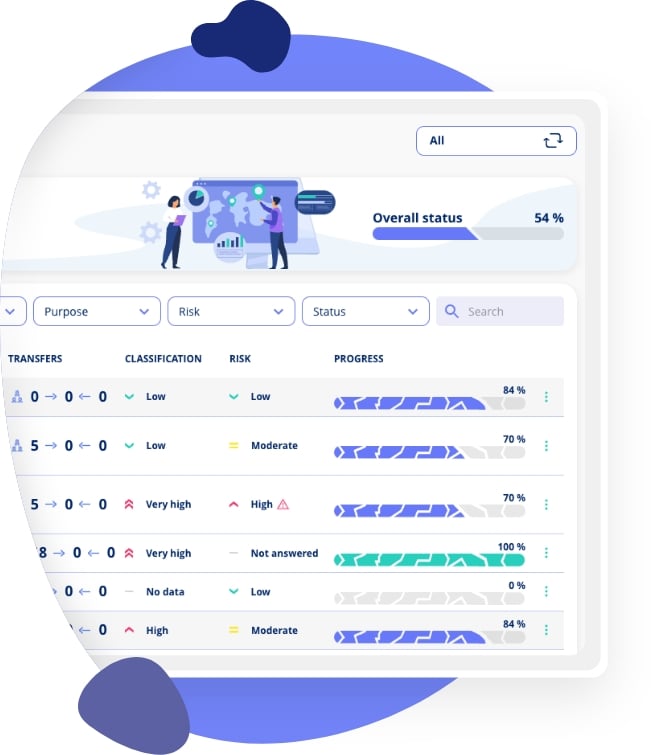
- Pre-built risk library: Start with common NIS2-relevant threats and controls
- Service mapping: Map critical services to supporting systems and dependencies
- Automated risk scoring: Calculate risk levels based on probability and impact
- Action tracking: Assign and monitor risk mitigation tasks with deadlines
- Integration: Link risk assessments to ISO 27001 and other frameworks
- Reporting: Generate risk reports for management and authorities
Book a demo to see how we can streamline your NIS2 risk assessment process.
Next Steps: From Assessment to Action
Once you've completed your NIS2 risk assessment, the real work begins—implementing the controls and mitigations you've identified. Here's what to do next:
- Prioritise high-risk items: Focus on risks that threaten critical services
- Create a roadmap: Develop a realistic timeline for implementing controls
- Assign ownership: Each risk and action needs a responsible person
- Secure budget: Present the business case to leadership for funding
- Track progress: Regularly review what's been implemented
- Test effectiveness: Verify that controls actually reduce risk as expected
- Update documentation: Keep your risk register current as things change
Remember, NIS2 compliance isn't just about checking boxes—it's about genuinely protecting the critical services that society depends on. A thorough risk assessment helps you focus your security efforts where they matter most.
Frequently Asked Questions about NIS2 Risk Assessment





.legal compliance platform
Streamline Your NIS2 Risk Assessment Process
-
Map critical services and their supporting IT systems
-
Assess and score risks with a structured methodology
-
Document risk mitigation measures aligned to Article 21
-
Track supply chain risks and supplier security posture
-
Maintain a living risk register with automatic reminders





.jpeg?width=131&height=26&name=right_people_logo%20(1).jpeg)

.jpg?width=58&height=26&name=Praktiserende%20L%C3%A6gers%20Organisation%20(1).jpg)
.jpg?width=108&height=26&name=finans%20danmark%20(1).jpg)


.jpg?width=89&height=26&name=klasselotteri%20(1).jpg)

-1.png?width=68&height=52&name=bws_shipping_rgb%20-%20Kopi%20(2)-1.png)



.jpeg?width=135&height=26&name=AH%20industries%20(1).jpeg)






.jpg?width=493&height=57&name=KAUFMANN%20(1).jpg)