
GRC Software: The Complete Guide to Governance, Risk and Compliance in One Platform
GRC software unifies governance, risk and compliance in a single platform, so one task can satisfy GDPR, NIS2, ISO 27001 and the AI Act at once. Here is what GRC software does, why it beats spreadsheets, and how to choose the right one.

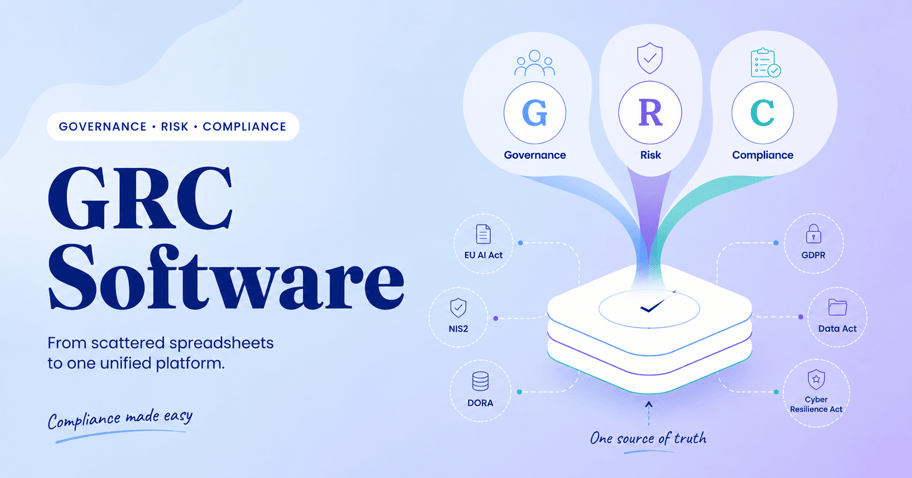
Most organisations reach the same breaking point. GDPR was manageable in a spreadsheet. Then NIS2 arrived. Then DORA, then the EU AI Act, all landing on top of ISO 27001 and the documentation you already maintain. Suddenly the same security measure has to be recorded in four different places, and no single person can keep track of it all. This is the moment GRC software stops being a "nice to have" and becomes the only sensible way to work.
GRC software is a single platform that brings governance, risk and compliance together, so you manage your policies, risk assessments and regulatory frameworks in one system instead of scattered spreadsheets and disconnected tools. Its decisive advantage for European organisations is simple: document something once, and it counts everywhere it is relevant.
This guide explains what GRC software actually does, why organisations move away from spreadsheets, how the major EU frameworks connect, and what to look for when you choose a platform. If you want the underlying concept first, read our introduction to governance, risk and compliance (GRC).
What Is GRC Software?
GRC stands for Governance, Risk and Compliance. It is first a management discipline and second a category of software. The term was coined in 2002 and formalised by OCEG (the Open Compliance and Ethics Group), which defines GRC as the integrated set of capabilities that lets an organisation reliably achieve its objectives, address uncertainty and act with integrity.
GRC software is the technology that puts that discipline into practice. Instead of storing policies in one place, risk assessments in another and framework requirements in a third, a GRC platform centralises everything into one source of truth. It maintains your risk registers, maps controls to regulations, automates recurring tasks and reminders, and produces audit-ready reports and dashboards.
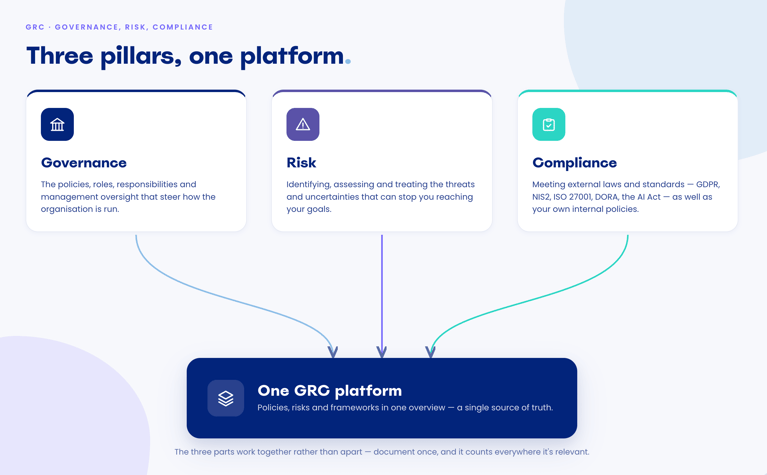
The three parts work together rather than in isolation:
✓ Governance – the policies, roles, responsibilities and management oversight that direct how the organisation is run.
✓ Risk – identifying, assessing and treating the threats and uncertainties that could stop you meeting your objectives.
✓ Compliance – meeting external laws and standards (GDPR, NIS2, ISO 27001, DORA, the AI Act) as well as your own internal policies.
GRC Software vs Point Solutions: What Is the Difference?
This is the distinction that matters most, and it is where many buyers get confused. A dedicated GDPR compliance tool solves one problem well. A standalone ISMS tool manages your ISO 27001 controls. Neither of them talks to the other.
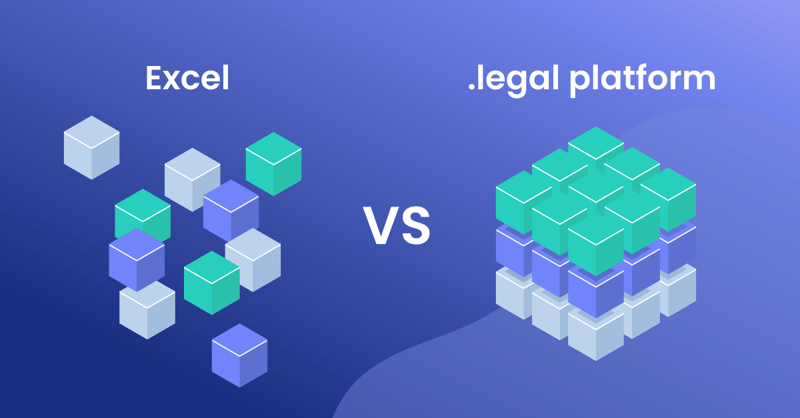
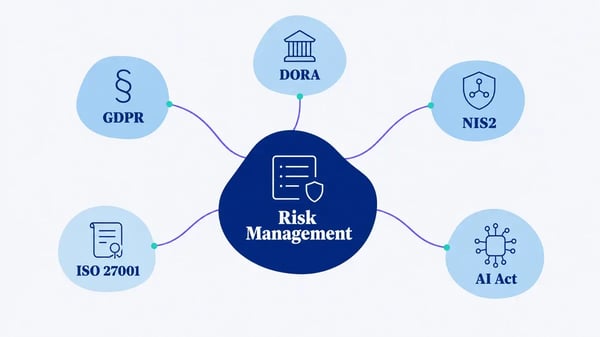
A GRC platform's whole reason for existing is that these frameworks overlap. NIS2, ISO 27001, DORA and GDPR share a large amount of underlying security and documentation requirements. When your tools are separate, you end up documenting the same control several times over. When they sit in one platform, a single piece of evidence can satisfy requirements across multiple frameworks at once.
In practice, this works through a shared catalogue of operational tasks. Rather than tying documentation to one framework, a well-built GRC platform maps each task to the specific controls it supports, across every relevant framework. So when you document your information security policy in a single task, that one action registers progress against ISO 27001, GDPR and any other framework that requires it. One task, mapped to many controls, in many frameworks. That is what "cross-framework" genuinely means, and it is the core of what makes a platform a platform rather than a prettier spreadsheet.
The key idea: With a GRC platform you maintain one catalogue of controls and tasks. Solve a requirement once, and it flows automatically into every framework that shares it. That is time you never spend twice.
What Does GRC Software Actually Do?
A comprehensive GRC platform typically covers the following capabilities, usually delivered as modules you can add as your needs grow.
| Capability | What it does |
|---|---|
| Governance & policy management | Create, version, approve and distribute policies; define roles, responsibilities and accountability; capture sign-offs from staff. |
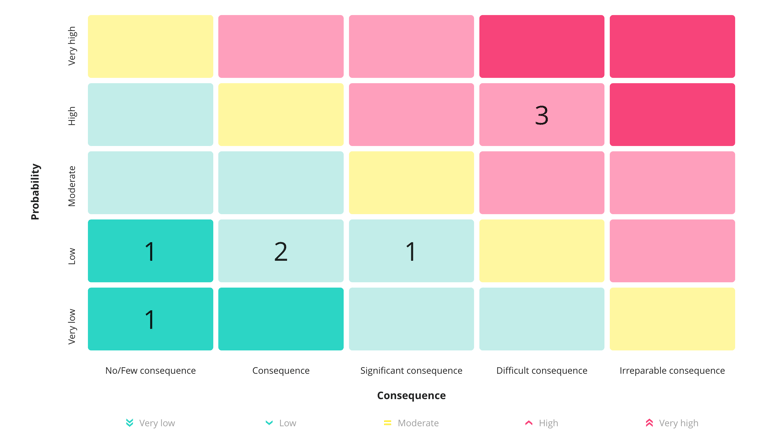
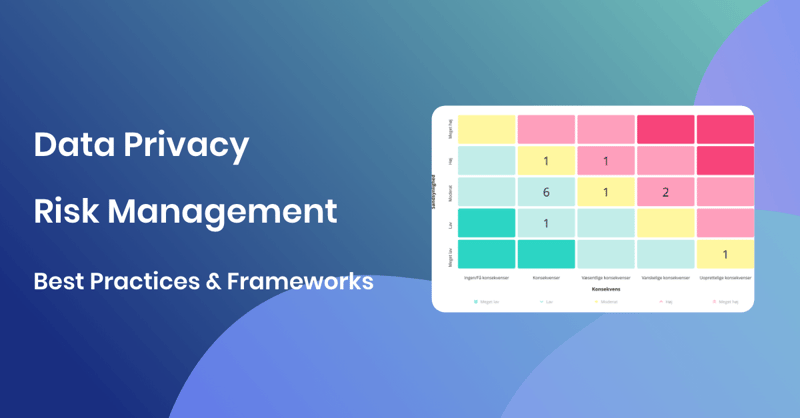
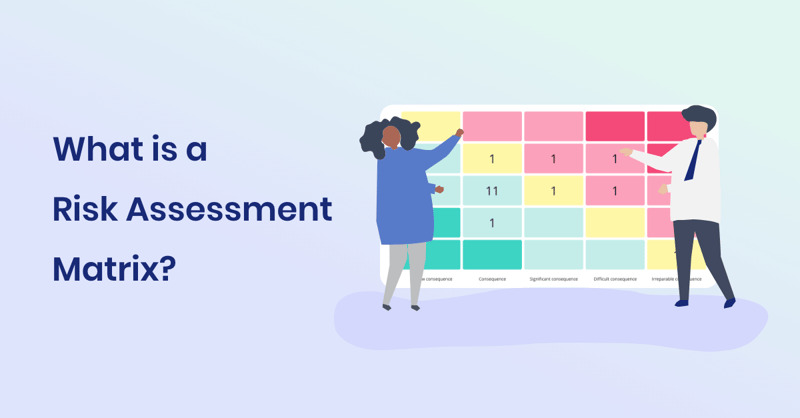
| Risk management | Risk registers, structured assessments, a risk matrix scoring likelihood against consequence, and mitigation plans you can act on. |
| Compliance & framework mapping | Map controls to GDPR, NIS2, ISO 27001, DORA and the AI Act, with a single control reused across frameworks. |
| Vendor & third-party management | Risk-classify suppliers, run assessments and document the supply chain, directly relevant to NIS2 supply-chain security. |
| Incident management | Log, classify and report incidents in line with NIS2's 24-hour, 72-hour and one-month reporting cascade. |
| Awareness & training | Send quizzes and policies to colleagues, gather responses and track who has signed off, a governance requirement under NIS2. |
| Task management (annual wheel) | Schedule recurring compliance, risk and governance tasks across the year, assign owners and track completion. |
| Data mapping & records | Map processes, systems and data flows, the foundation of your GDPR Article 30 records. |
| Reporting & dashboards | Real-time, board-ready overviews you can export for management, without giving leadership a login. |
You do not need every module on day one. The right approach is to start with the areas you are obliged to cover, and add capabilities as your regulatory burden grows. See the full range in our Frameworks module and Risk Management module.
Why Move from Spreadsheets to GRC Software?
The real competitor to GRC software is not another vendor. It is Excel, Word and a shared drive. Managing compliance manually is common, and for a single framework with a handful of people it can just about work. The problem is that it does not scale, and it is fragile in exactly the ways that regulators care about.
The most striking evidence comes from spreadsheet research itself. Raymond Panko's summary of field audits of operational spreadsheets found errors in 94% of the spreadsheets examined, with an average of around 5% of cells containing a mistake. That is a shaky foundation for documentation that has to survive an audit or a regulator's inspection.
The practical pain points of the manual approach:
✗ No reliable audit trail – regulators want to see who did what and when. Spreadsheets and email threads cannot prove that.
✗ No version control – which copy is the current one? Nobody is ever quite sure.
✗ Silos and blind spots – data scattered across teams means overlaps between frameworks are missed, and work is duplicated.
✗ No overview – leadership cannot see the real compliance status at a glance.
✗ Manual effort – evidence gathering, reminders and reporting eat the time that should go into actually reducing risk.
The single biggest thing you gain from a platform that a spreadsheet can never give you is quality risk management you can actually operate from. Risk is the hardest part of GRC to do well, and it is nearly impossible to produce assessments you can act on without a tool that guides you through the process.
The European Angle: One Platform for Overlapping EU Regulation
This is where GRC software earns its place for European organisations. The major EU frameworks overlap heavily, and increasingly they all point at the same senior managers.
| Framework | What it demands |
|---|---|
| GDPR | Records of processing (Article 30), DPIAs, risk assessments and breach handling. |
| NIS2 | Ten minimum risk-management measures, incident reporting, supply-chain security and, crucially, management accountability. |
| ISO 27001 | A full information security management system (ISMS) built on risk assessment, widely used as the practical control set for NIS2. |
| DORA | ICT risk management, incident reporting, resilience testing and a register of ICT third parties, for financial entities. |
| EU AI Act | Risk-based obligations for AI systems, including risk management, documentation and human oversight for high-risk use. |
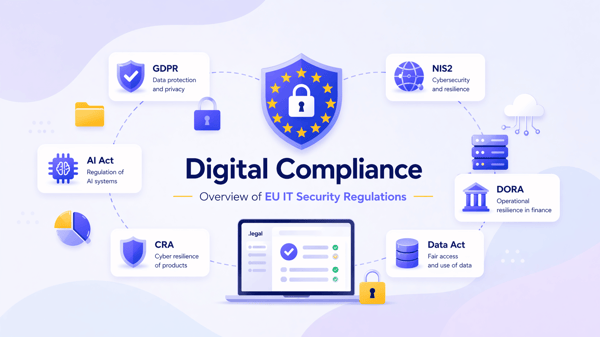
Look at that list and the overlap is obvious: every one of them demands risk assessment, documentation, incident handling, supplier oversight and management involvement. Handle them in separate tools and you do the same work five times. Handle them in one platform and a single control set serves them all.
And there is no sign that the regulatory load will ease. It is far more likely that the coming years bring more EU regulation, not less. Building on a platform now means you are ready for the next framework rather than starting another spreadsheet from scratch.
A Concrete Example of Overlap
Imagine your organisation runs an HR system. That system is an asset you need to document.
Your IT lead is accountable for the system and knows exactly which security measures are in place. In a platform, they record those measures once. Your legal or data protection team then reuses that same information in the GDPR record of processing activities, without having to chase IT for answers, because the information is already there.
Meanwhile, your contract manager owns the data processing agreement with the HR system's supplier and keeps it in the contract module. When they add a new appendix with service-level agreements, those SLAs are not just a contract detail. They are directly relevant to your NIS2 supply-chain obligations, because NIS2 requires security conditions in your vendor arrangements. The platform makes sure the right people in the right departments are notified when that change happens.
That is what integrated GRC looks like in practice. It is not only that data is mapped across frameworks. It is that people across departments contribute their piece once, and everyone else who needs it gets it automatically.
Governance: The Neglected Leg of GRC
Of the three letters in GRC, governance is the one that gets the least attention, and it is where programmes most often fall down. Governance is easy to overlook precisely because, when it works well, it is almost invisible. It is the layer that quietly makes sure the right people have the right access and the right responsibilities.
Good governance in a platform shows up in the detail. Access is set by role, controlling not just what a person can do but what data they can see, so nobody has visibility into things outside their domain. Access can be shaped by function and by group, right down from a parent company to an individual department. Every mapped asset, process or vendor has a single named person responsible, so when something is wrong, you always know who to talk to, even if others help maintain it.
Governance also means meeting people where they are. Not everyone in an organisation should be a full platform user. When you manage a policy, you can send it to colleagues who never log in, giving them a simple view and a way to sign off that they have read it, without exposing them to functionality they do not need.
This leg of GRC is no longer optional. NIS2 makes the management body responsible for approving and overseeing cybersecurity risk measures, requires management to undergo training, and allows senior managers to be held personally liable for failures. DORA places similar accountability on the management body of financial entities. Governance and awareness training are now legal requirements, not cultural extras.
Risk: The Hardest Part, and the Best Reason to Buy
If governance is the quiet foundation, risk management is the end game. It is arguably the single most important part of a GRC platform, and also the most difficult to do well. This is exactly why it is the strongest argument for using software rather than spreadsheets: producing quality risk assessments you can actually operate from is very hard without a tool to guide the process.
The advantage of doing risk inside a platform is that it builds on everything you have already mapped. Once your processes, vendors and assets are documented, you do not start a risk assessment from a blank page. You add risk scenarios directly to the entities that already exist. Take an asset: you attach possible risk scenarios to it, assess whether action is needed, and then build a mitigation plan to bring the risk down. A good risk module is flexible, but it also guides you to identify the risks in your specific setup rather than leaving you staring at an empty template. Learn more in our guide to information security risk management.
Is GRC Software Only for Large Enterprises?
No, and this is one of the most persistent misconceptions in the market. GRC suites were historically heavyweight enterprise deployments, and much of the market still talks about them that way. But that framing is out of date.
Two things have changed. First, NIS2 pulls medium-sized entities (broadly those with 50 or more employees) across many sectors into scope. If you are a company of that size, the documentation requirements are genuinely difficult to figure out and keep an overview of without a platform. Second, even if you are not directly in scope, one of your customers might be, and as their vendor they will impose NIS2-related requirements on you. Living up to one compliance framework is hard enough without a tool. Living up to several is very difficult.
The answer to the "overkill" fear is modularity. A well-designed platform works for a large enterprise and for a smaller company, because you add only the modules you need. You can add them over time, so you avoid a large cost at the outset and build up your compliance platform in step with your growing obligations. For more on this decision, read do you need compliance software?
What to Look for When Choosing GRC Software
Not all GRC platforms are equal, and feature lists rarely tell you what you actually need to know. Use these criteria to evaluate any option.
1. Genuine ease of use
Everyone claims to be user-friendly. Many vendors have simply built an Excel-style tool with a nicer interface. Real usability is broader than the screen. It means it is easy to get an overview, see status and progress, and know where to make an update when your documentation changes. It also means having the right data at the right point, so when an audit comes, you can find the documentation you need with ease. Think about the whole journey of using the platform, not just the first impression.
2. Framework coverage and cross-framework mapping
Does the platform cover the frameworks you actually face (GDPR, NIS2, ISO 27001, DORA, the AI Act), and does it reuse a single control across them? This is the difference between a real GRC platform and a collection of separate tools.
3. Modularity
Can you start small and expand? You should not have to buy an entire enterprise suite to solve two frameworks.
4. EU data residency and sovereignty
For European organisations, where your data is stored matters. Look for EU hosting and clear security documentation. Read more on digital sovereignty and EU legislation.
5. Governance and awareness built in
Check that the platform handles role-based access, accountability, policy sign-offs and awareness training, not just risk and compliance mechanics.
6. Reporting for leadership
Leadership will never log in. You need reports that are easy to read and can be exported, so management gets a clear overview of what matters most, right now.
7. Transparent pricing and support
Look for clear pricing and real onboarding support. Hidden costs and thin support are common failure points.
Common Mistakes When Implementing GRC Software
✗ Buying a tool before defining your programme, goals and ownership.
✗ Choosing an over-complex enterprise suite the team cannot actually use.
✗ Treating governance, risk and compliance as silos rather than one connected model.
✗ Doing risk assessment weakly or too rarely.
✗ No clear accountability and no genuine management engagement.
✗ Relying on technology while neglecting awareness, training and culture.
✗ Under-resourcing incident response, then missing the NIS2 24-hour clock.
✗ Overlooking vendor and third-party risk.
How the Annual Wheel Makes Compliance Operational
Documentation on its own is static. What turns it into a living compliance programme is the recurring work you do across the year. A compliance task management module, often called an annual wheel, is where you set up and track all of that. It gives you a single view of the status of every compliance, risk and governance task in the organisation, assigns owners and sends notifications to the right people at the right time.
This is what keeps a programme alive rather than a folder of documents that ages quietly until the next audit. It is also where awareness fits in: sending out quizzes and policies, gathering responses, and producing a risk score or a record of who has signed off on which policy.
The Bottom Line: What You Gain over Excel
If you take one thing from this guide, take this. The single biggest thing GRC software gives you that a spreadsheet never can is quality risk management you can operate from, built on documentation that stays connected across every framework you face. Everything else (the audit trail, the overview, the automation, the governance) follows from working in one connected system instead of many disconnected files.
If you are pulled into NIS2 or DORA scope, if you manage more than one framework, if you are losing time to spreadsheet errors, or if you cannot produce an audit trail on demand, it is time to move to a platform.
.legal is built for exactly this. It handles multiple compliance areas in one modular system, maps a single task across the frameworks it supports, and is designed to be usable by everyone, from the compliance lead to the colleague who just needs to sign off a policy. It is covered by ISAE 3402 and ISAE 3000 assurance reports and hosts your data in the EU.
Want to see how it works with your own frameworks? Book a demo and we will walk you through governance, risk and compliance in one platform.

.png?width=600&height=400&name=securitybreach-feature%20(1).png)
.legal compliance platform
Unify Governance, Risk and Compliance with .legal
-
One task mapped across every framework it supports
-
Quality risk management you can actually operate from
-
Role-based governance, policy sign-offs and awareness training
-
EU-hosted, with ISAE 3402 and ISAE 3000 assurance reports





.jpeg?width=131&height=26&name=right_people_logo%20(1).jpeg)

.jpg?width=58&height=26&name=Praktiserende%20L%C3%A6gers%20Organisation%20(1).jpg)
.jpg?width=108&height=26&name=finans%20danmark%20(1).jpg)


.jpg?width=89&height=26&name=klasselotteri%20(1).jpg)

-1.png?width=34&height=26&name=bws_shipping_rgb%20-%20Kopi%20(2)-1.png)



.jpeg?width=135&height=26&name=AH%20industries%20(1).jpeg)






.jpg?width=225&height=26&name=KAUFMANN%20(1).jpg)