
 Watch the video


Risk areas and scales
Every area gets its own matrix, its own wording and its own appetite, so GDPR and NIS2 are each assessed on their own terms.
Risk areas and scalesADD-ON
GDPR, NIS2, ISO 27001, the AI Act — each one asks you to assess risk, and each one asks in its own language. Enterprise Risk Management gives every area its own scale, its own wording and its own appetite, assesses the processes, assets and suppliers you already have in .legal, and adds the exceedances up into one report management can act on.

.png?width=68&height=52&name=bws_shipping_rgb%20-%20Kopi%20(2).png)





.jpeg?width=131&height=26&name=right_people_logo%20(1).jpeg)

.jpg?width=58&height=26&name=Praktiserende%20L%C3%A6gers%20Organisation%20(1).jpg)
.jpg?width=108&height=26&name=finans%20danmark%20(1).jpg)


.jpg?width=89&height=26&name=klasselotteri%20(1).jpg)

-1.png?width=34&height=26&name=bws_shipping_rgb%20-%20Kopi%20(2)-1.png)



.jpeg?width=135&height=26&name=AH%20industries%20(1).jpeg)






.jpg?width=225&height=26&name=KAUFMANN%20(1).jpg)




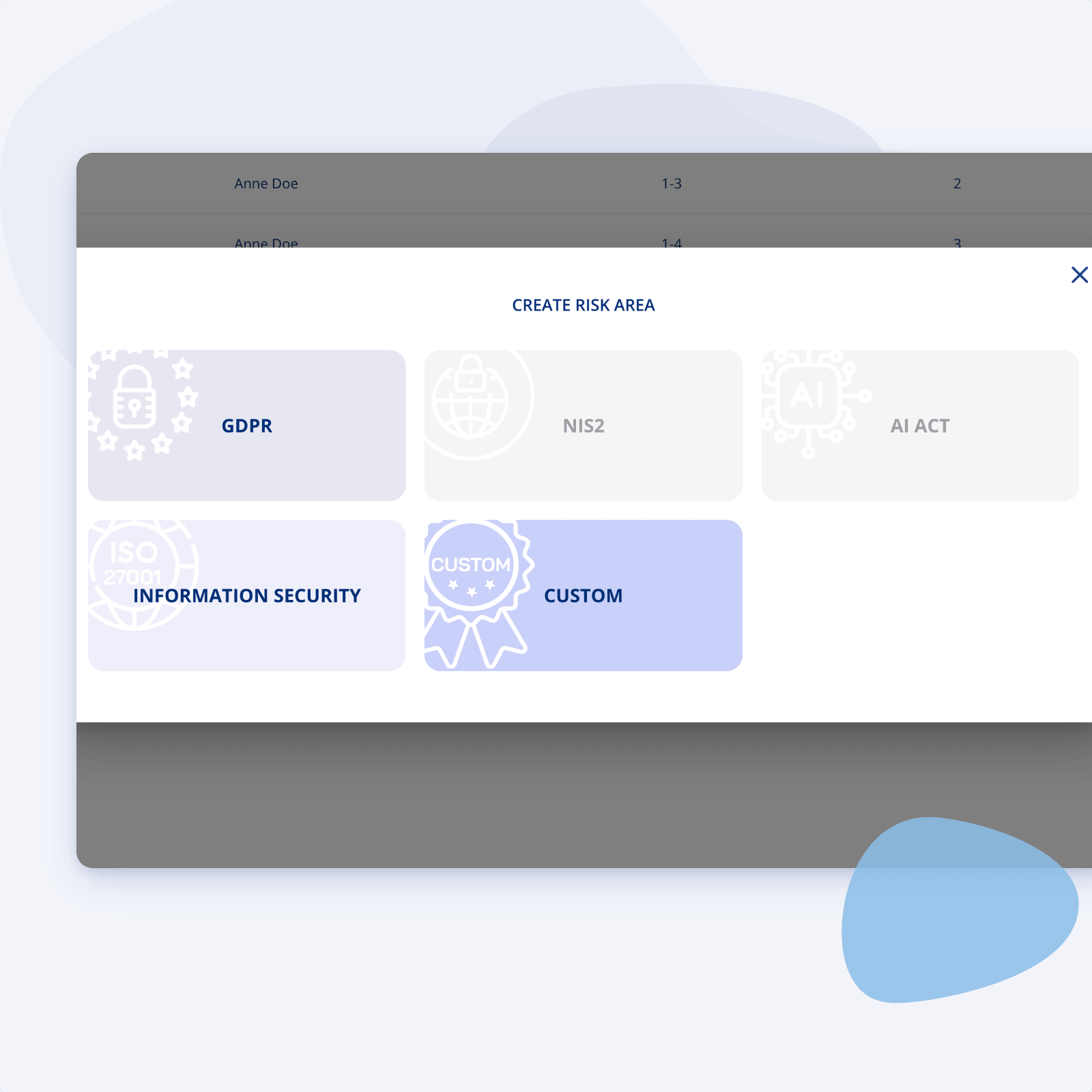
Most organisations don't have a risk problem. They have four risk problems, in four different files, on four different scales. The GDPR assessment was built when GDPR landed. NIS2 got its own sheet because three steps weren't enough. Information security has a fifth. And when management asks how the organisation is doing on risk, somebody spends a week building an answer by hand. Why one piece of work can cover several frameworks is set out in our guide to information security risk management.
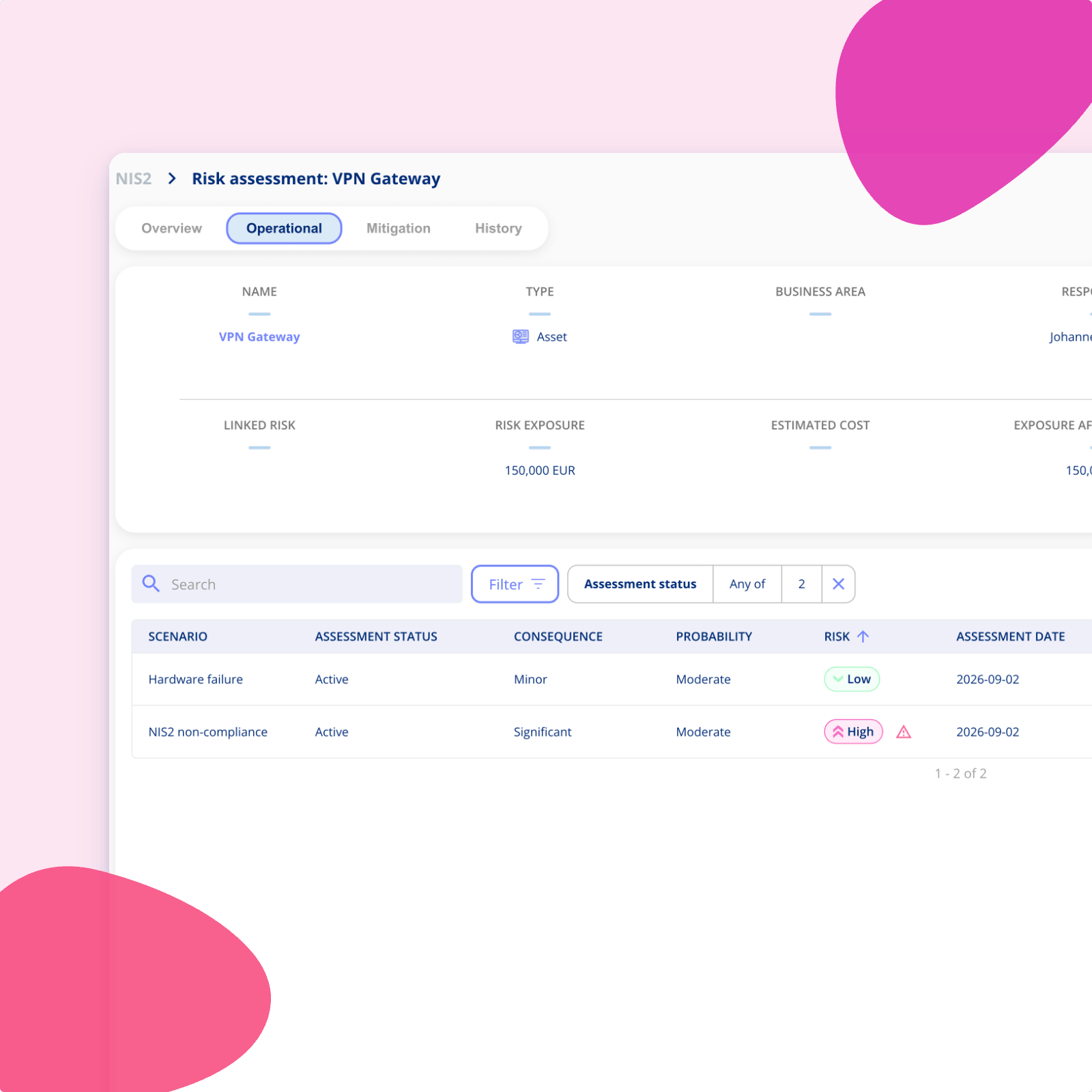
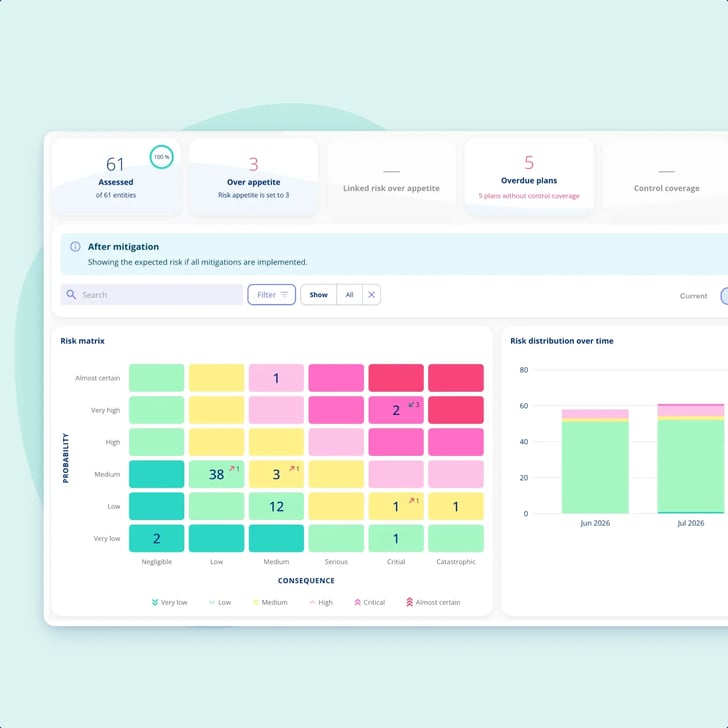
You don't build a risk register. You already have one — the processing activities, the assets and systems, and the suppliers that live in .legal today. Enterprise Risk Management assesses those, against scenarios that fit the entity in front of you, and calculates the level from that area's own matrix.
companies
users
contracts
processing activities


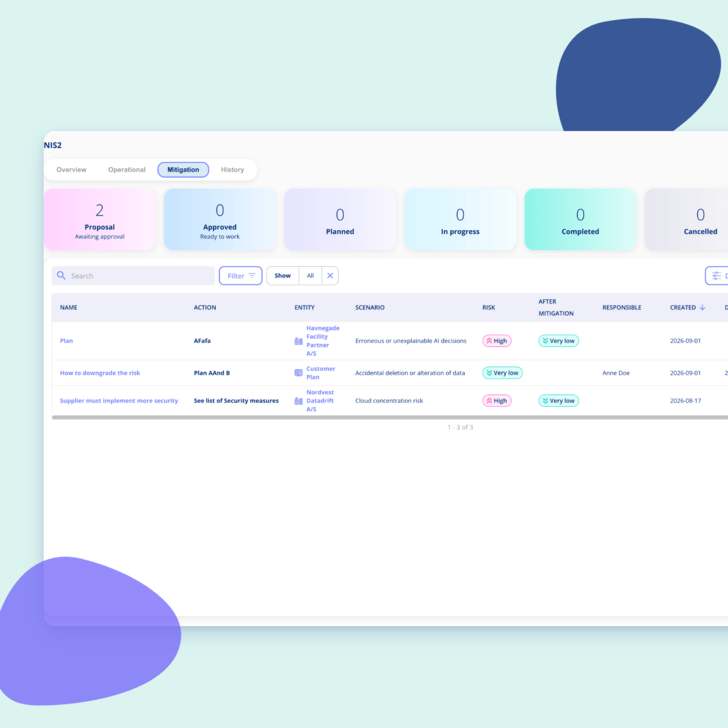
Identifying a risk is the easy part. Enterprise Risk Management starts where it matters — the risks above the appetite you set yourselves — and makes you take a position: accept it, avoid it, or build a plan. Plans carry an owner, an approval and a date, and a completed plan updates the risk on its own.
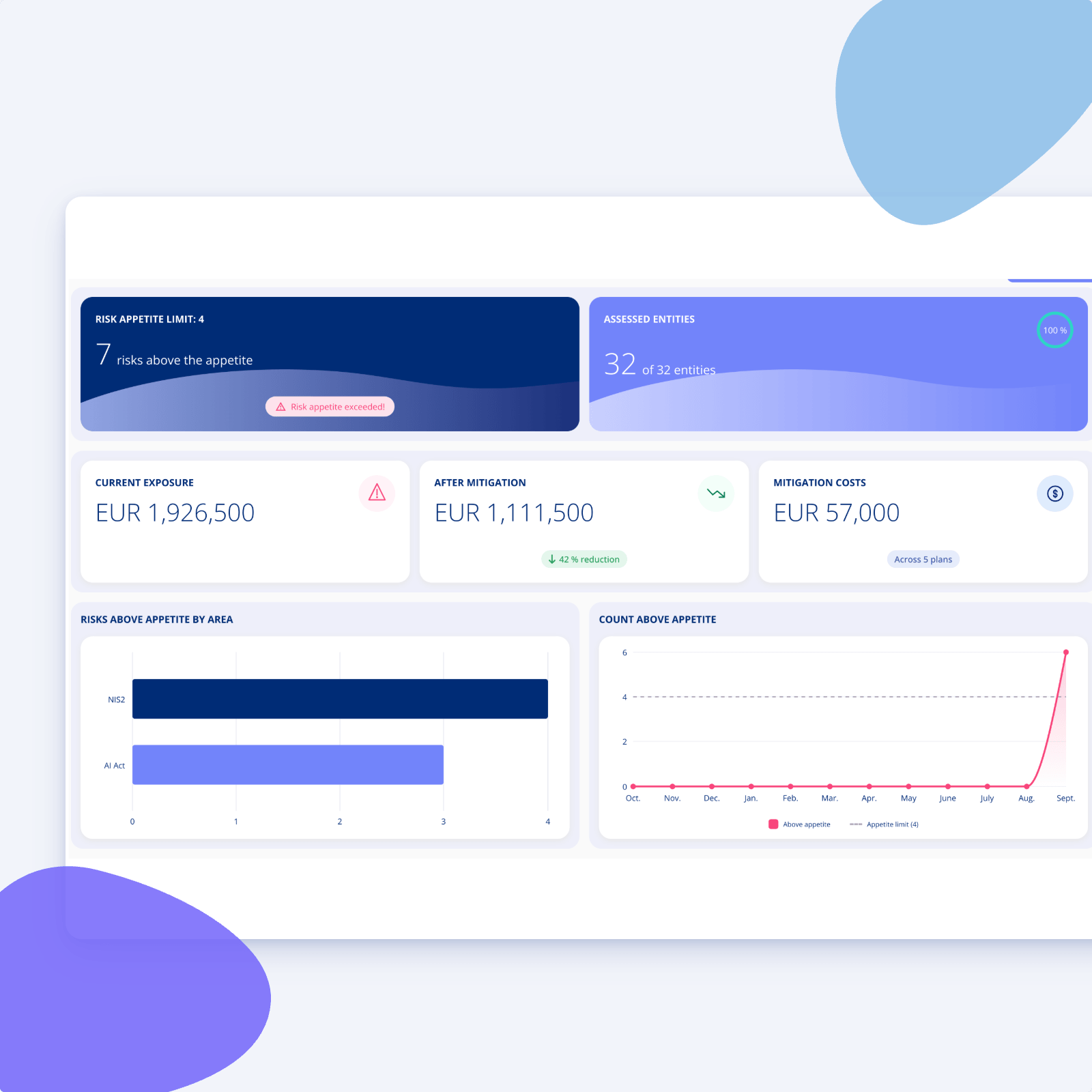
If every area runs its own matrix, you can't average across them — and you don't need to. Being over appetite means the same thing everywhere, whatever the scale underneath, so the exceedances add up. Set one global appetite, and the management report reads the whole organisation against it.

Enterprise Risk Management varies in scope and complexity; therefore, this service is part of our Enterprise plan, where we tailor a price based on your needs.

Custom
Talk to sales


A short look at risk areas, scales and appetite — the piece everything else builds on.

Getting You Started
Customer Support
.legal compliance platform