
ADD-ON · ENTERPRISE RISK MANAGEMENT
Catch it when it happens.
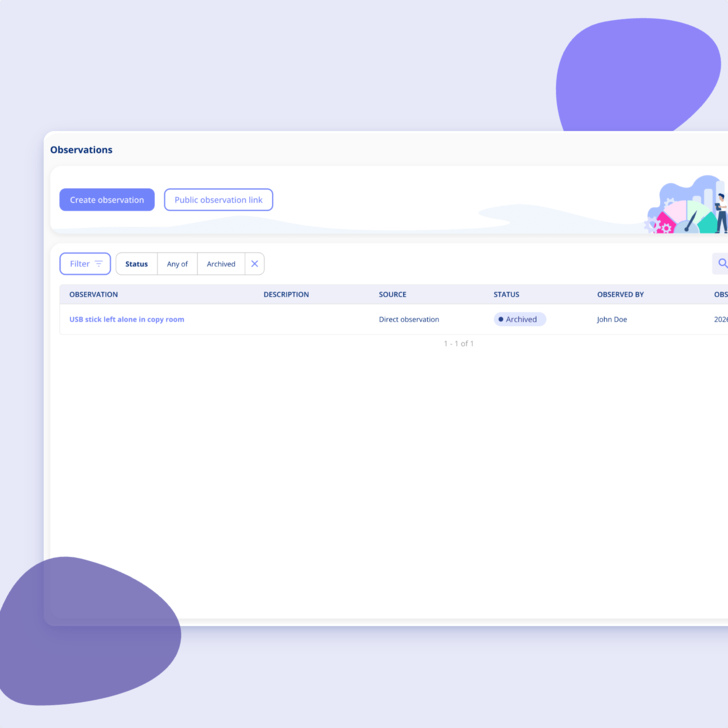
Risk rarely turns up during the hour you set aside for risk work. Observations give anyone a mobile-friendly way to report what they've noticed, through a link that doesn't ask them to log in. It lands in an inbox, and you decide what deserves to become a risk scenario.
 Watch the video

.png?width=68&height=52&name=bws_shipping_rgb%20-%20Kopi%20(2).png)






.jpeg?width=131&height=26&name=right_people_logo%20(1).jpeg)

.jpg?width=58&height=26&name=Praktiserende%20L%C3%A6gers%20Organisation%20(1).jpg)
.jpg?width=108&height=26&name=finans%20danmark%20(1).jpg)


.jpg?width=89&height=26&name=klasselotteri%20(1).jpg)

-1.png?width=34&height=26&name=bws_shipping_rgb%20-%20Kopi%20(2)-1.png)



.jpeg?width=135&height=26&name=AH%20industries%20(1).jpeg)






.jpg?width=225&height=26&name=KAUFMANN%20(1).jpg)




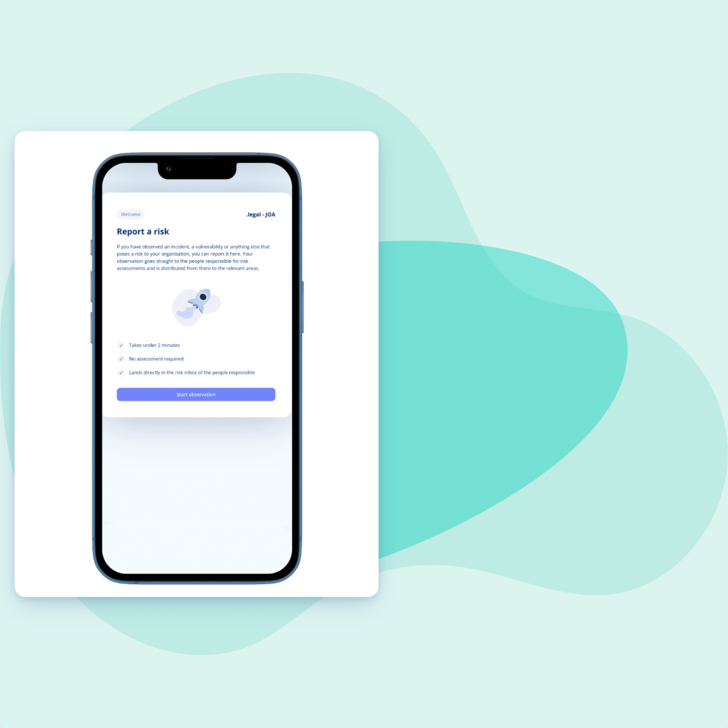
Most risks are noticed by someone who won't report them
Something gets mentioned in a meeting. A colleague walks past a room that shouldn't have been left unlocked. An advisory lands in someone's inbox. Then nothing happens, because there are three clicks and a login sitting between noticing something and recording it.
-
The reporter isn't a risk person: They don't have an account, and they shouldn't need one.
-
The moment passes: If it can't be reported in thirty seconds on a phone, it usually isn't reported at all.
-
Volume needs triage: Capturing more only helps if there's a sensible way to sort through what comes in.
From an observation to a risk scenario
A short look at how things get caught and what happens next.

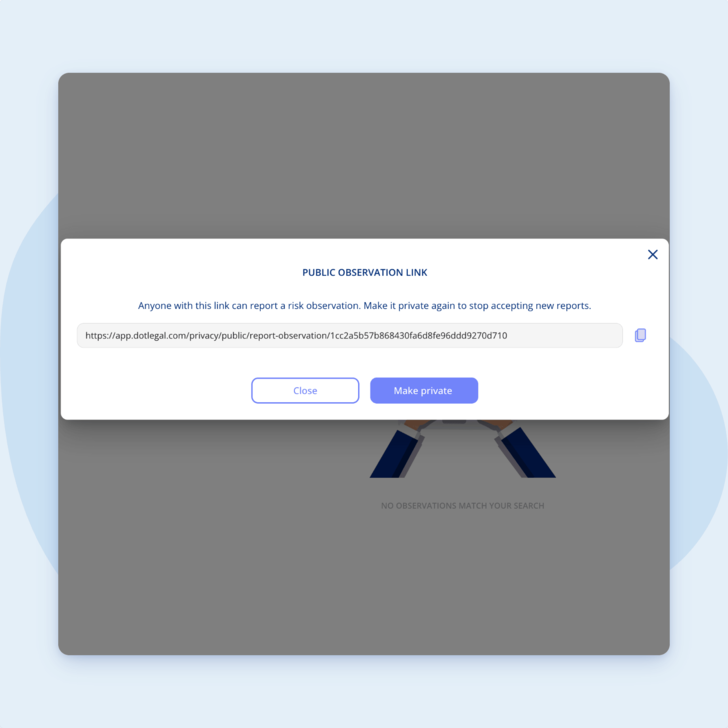
Report from anywhere, no login required
Observations are shared through a public link.
-
No account needed: Anyone in the organisation can flag a concern without being a user in .legal.
-
Built for a phone: Short form, quick to submit, designed for the moment somebody notices something.
-
One link to share: Put it wherever people already are, on the intranet, in an onboarding pack, on a wall.
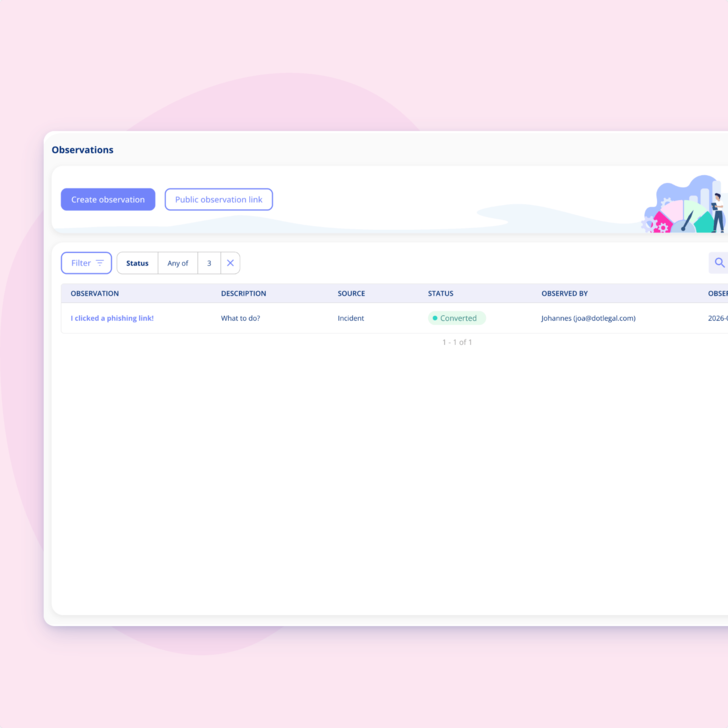
Everything lands in one inbox
Reported observations arrive in a single place to be reviewed.
-
One queue: Whatever the source, it ends up somewhere with an owner rather than in a mailbox.
-
Reviewed, not auto-filed: A person decides what each observation actually is before anything happens to it.
-
A visible backlog: You can see what's waiting, which is the fastest way to keep it from piling up.
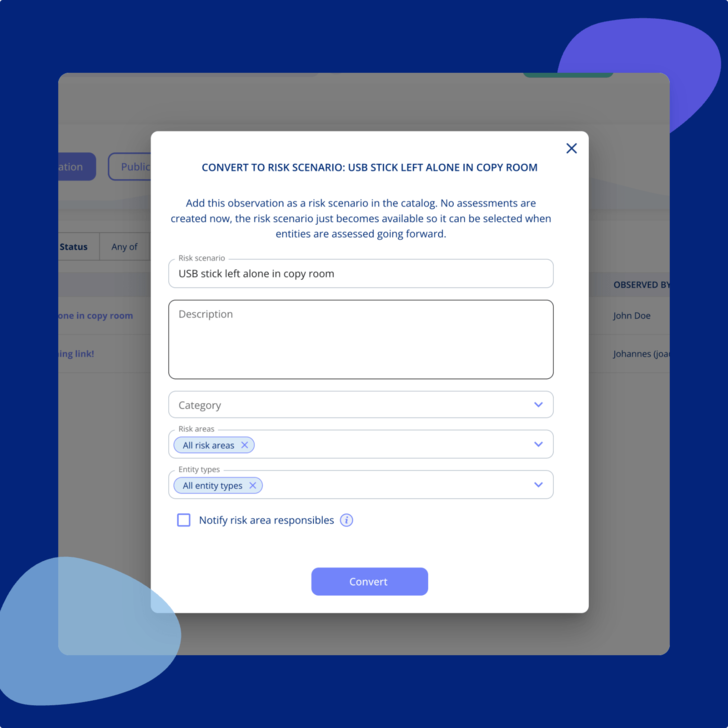
Convert an observation into a risk scenario
When something is worth acting on, it moves into the risk work properly.
-
One step across: Turn the observation into a risk scenario without retyping it somewhere else.
-
The responsible person is notified: Whoever owns the area finds out automatically.
-
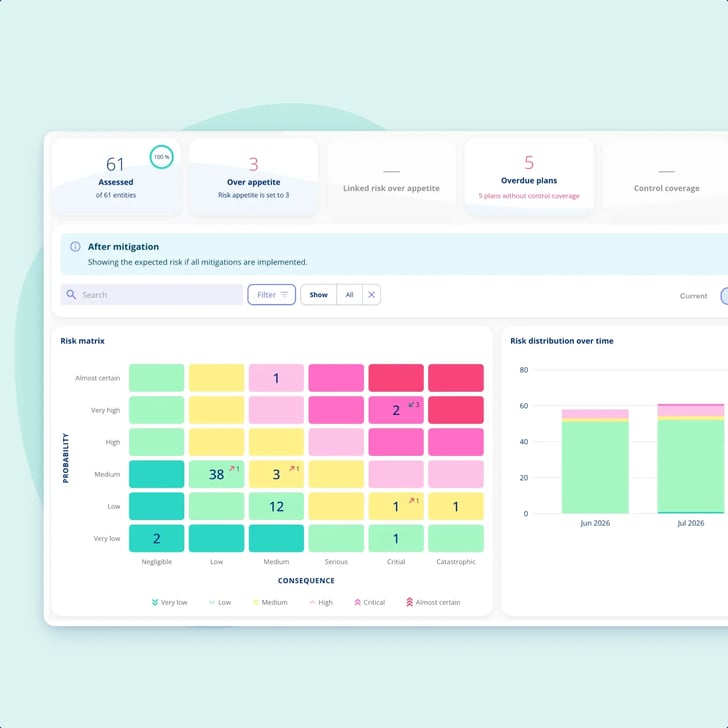
Assessed like anything else: From there it follows the same route as every other scenario, with consequence, probability and justification.
Not everything needs to become a risk
Closing something is a perfectly good outcome.
-
Triage is the job: Reviewing an observation and deciding it isn't relevant is a decision, and it's recorded as one.
-
Keeps the register honest: A risk register that absorbs everything reported to it quickly stops being useful.
-
Encourages reporting: People keep reporting when they can see it's being read, not when everything turns into a task.

Getting You Started
Customer Support
-
You get a dedicated Customer Success Manager.
-
Personal onboarding to ensure a smooth start.
-
Support available Monday to Friday, 9 AM to 3 PM.

.legal compliance platform
Begin with Enterprise Risk Management today
-
Works alongside your existing frameworks
-
Free onboarding included
-
No commitment